நிலா
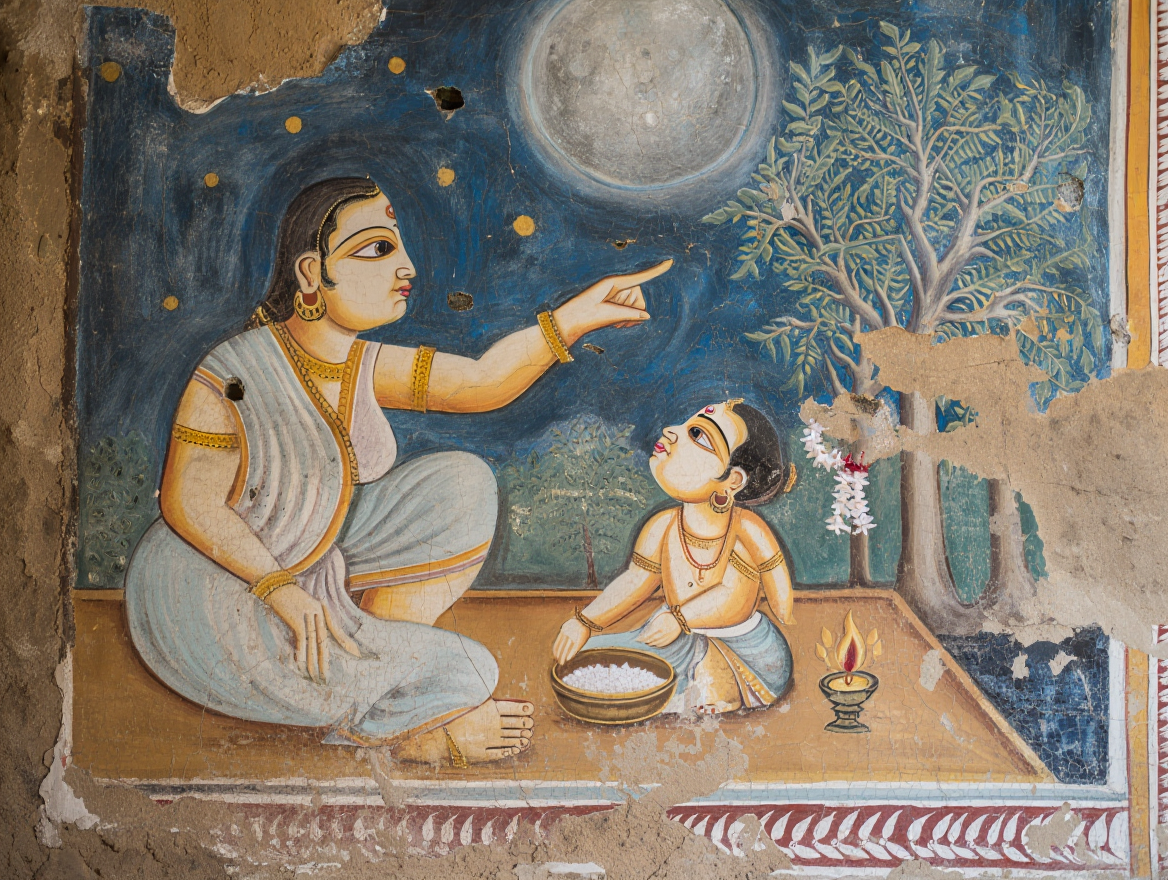
Tamil has three words for the moon, and the one a child learns first is the oldest.
நிலா (nilā) is Proto-Dravidian. The comparative evidence is unambiguous: cognates across the entire family — Telugu నెల (nela), Kodagu ನೆಲಚಿ (nelaci), Malayalam നിലാ (nilā), Gondi nelenj — all mean moon, without exception. The folk etymology that connects நிலா to நில் (nil, to stand, to abide), making the moon “the one that stays” against the sun’s daily disappearance, is a beautiful reading. It is not the linguistic story. நிலா was already the word for moon when Proto-Dravidian split into its daughter branches. In Sangam akam, நிலா and its variant நிலவு (nilavu) carry the moon-as-witness motif: in Kuṟuntokai 47, the heroine’s friend addresses the moon directly as நெடுவெண்ணிலவே (neṭuveṇ nilavē), “long white moon”, scolding it for being bright enough to expose the secret night-trysts of lovers. The poet is named after this very phrase.
திங்கள் (tiṅkaḷ) is the calendrical moon. The lunar month was a திங்கள், and the calendar built from it gave Tamil its weekday names: Monday is திங்கட்கிழமை (tiṅkaṭkiḻamai), the day of the moon. In Sangam usage திங்கள் was active for the celestial body too, but the akam tradition reached for நிலவு when the moon had to bear emotional weight. Most of திங்கள்’s work has now been transferred to the calendar. Modern Tamil keeps திங்கள் mostly inside the weekday, where most speakers no longer hear the moon inside it at all.
சந்திரன் (cantiraṉ) arrived through Sanskrit candra. The moon became a person. A graha in the navagraha system. Kin to Soma. Subject of horoscopes. சந்திரன் is the moon as agent, where நிலா is the moon as light.
The inversion is the point. The oldest word kept the intimacy. The native calendrical word retreated into a weekday. The loanword became the formal scientific term. This is the typical shape of a Tamil sky-word: not displacement but redistribution by register, with each new arrival carving out the niche where it could do work the existing words could not.
Etymology phylogeny
Time runs left to right. Solid lines mark descent; dashed lines mark semantic borrowing.