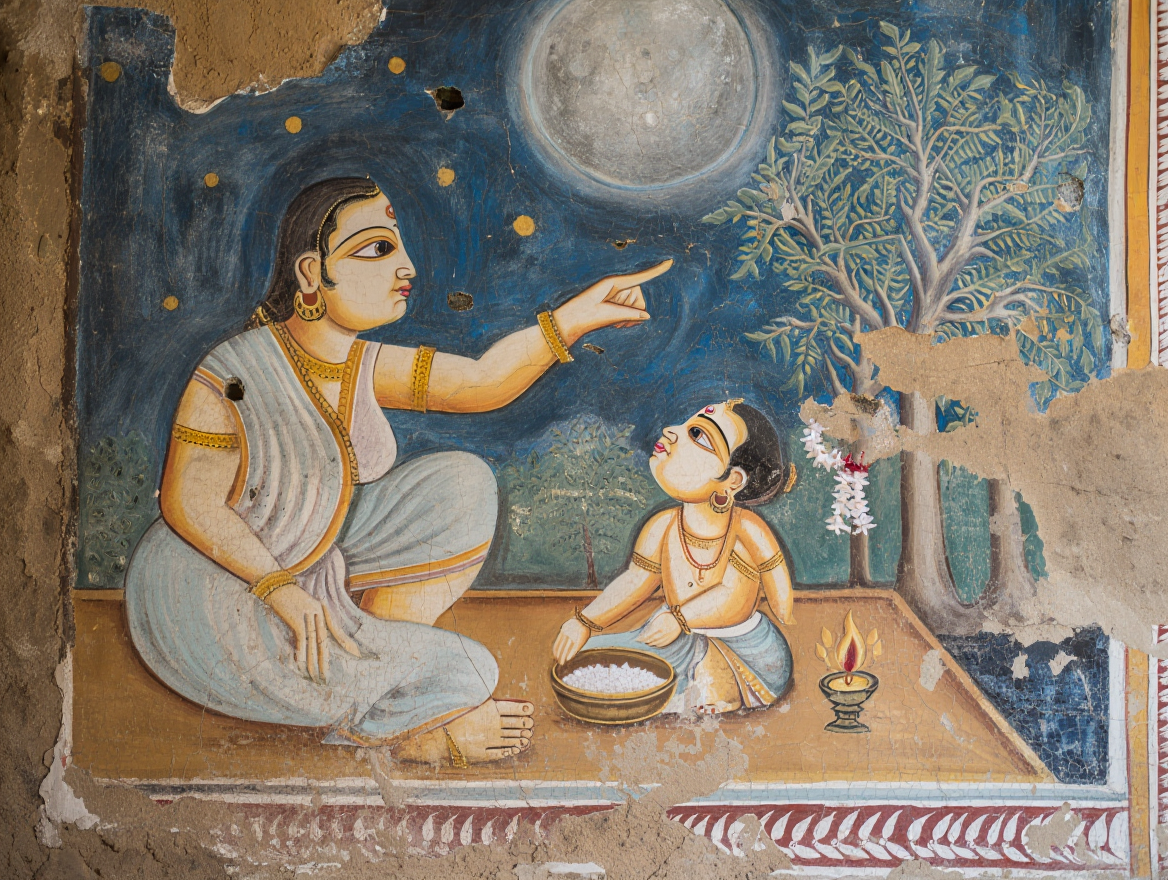
Tamil keeps three moons. நிலா is the soft, lingering one of lullabies, descended directly from Proto-Dravidian *nel-, intimate from its first attestation. திங்கள் is the calendrical moon, the word for the lunar month that now survives mostly as the name of Monday. சந்திரன் is the personified deity inherited through Sanskrit. The Sangam akam tradition reached for நிலவு, not திங்கள், when the moon had to bear emotional weight (Kuṟuntokai 47 is canonical). The most ordinary modern fact is that திங்கள், once a working word for the moon, now lives almost entirely inside a weekday. The folk etymology that derives நிலா from நில் (to abide) is widely repeated but unsupported by comparative Dravidian evidence: the cognates across the family all mean moon, with no abide-semantics anywhere.
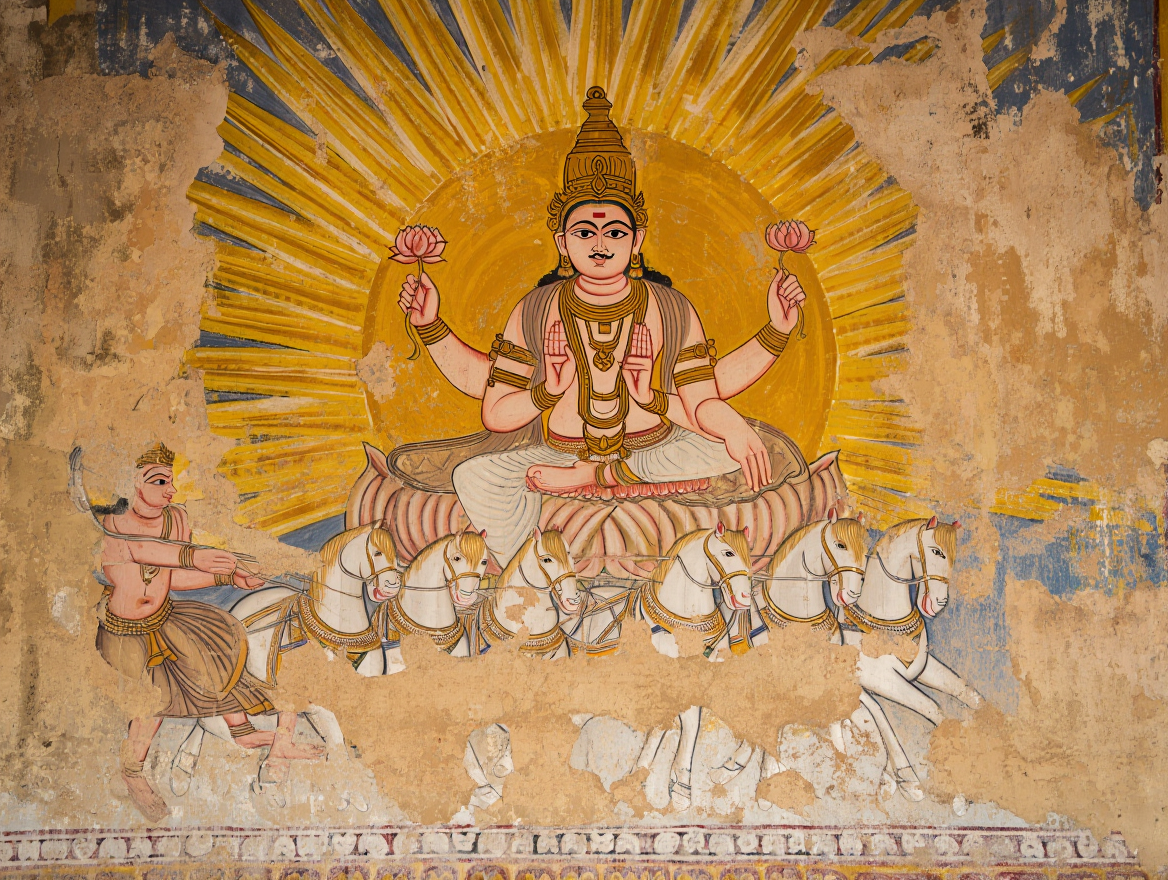
The word விண்மீன் is a small theory of the universe. Whoever coined it looked at the night sky and decided it was an ocean — dark, deep, full of moving things. That decision is encoded permanently in the compound. நட்சத்திரம் is more precise, more useful for navigation and astrology, and carries none of this. The fish got beached somewhere around the medieval period and never found its way back to the water.