சொற்பயணம்
Words carried through older Tamil, classical poetry, borrowed systems, and modern speech.
Recent words
Most Tamil words split into a native register and a Sanskrit-borrowed one, with the native word turning everyday and the borrowing turning formal. Tamizh inverts the pattern. The word did not borrow; it lent. Prakrit took tamiḻ as damiḷa and Sanskrit reshaped it into draviḍa, which centuries later returned to Tamil as tirāviṭa. This is the only entry in the dictionary whose subject is the dictionary's own medium, the word the whole work was always going to reach.
**கேளிர்** (kēḷir) is the kin-side counterpart to ஊர் in Kaṉiyaṉ Pūṅkuṉṟaṉār's famous couplet. Both words undergo the same universalising stretch: 'every place is my place, everyone is my kin.' Both mean the most particular and the most universal at once. The Madras Tamil Lexicon (via agarathi.com) records three senses for கேளிர் — friends (Pattuppāṭṭu Porunararruppadai 74), relations (Puṟanāṉūṟu 42:17), and in the singular: husband or master of the house (Tolkāppiyam). The root கேள் generates the whole family: கேள் (relation), கேள்வன் (husband), கேண்மை (friendship-bond), கேளிர் (kindred). Where modern Tamil distributes kinship across multiple specialised words — குடும்பம் for the household-family (from Sanskrit kuṭumba), சுற்றம் for the kin-circle, உறவு for general relations, பந்தம் for emotional bonds — Sangam Tamil held all of these inside the single word கேளிர். One modern Chennai instantiation worth recording: the **Kaylir Canteen** at CIT Colony in Mylapore, opened in 2023 by Bhargav and Dhanya, takes its name from the second hemistich of Puṟanāṉūṟu 192. The front wall carries Kaṉiyaṉ's full couplet as graffiti. The founders describe their project as 'bringing people together' through home-style Tamil food. Two and a half thousand years after the line was written, the word is back on a wall in Chennai, holding the same promise: everyone is kin.
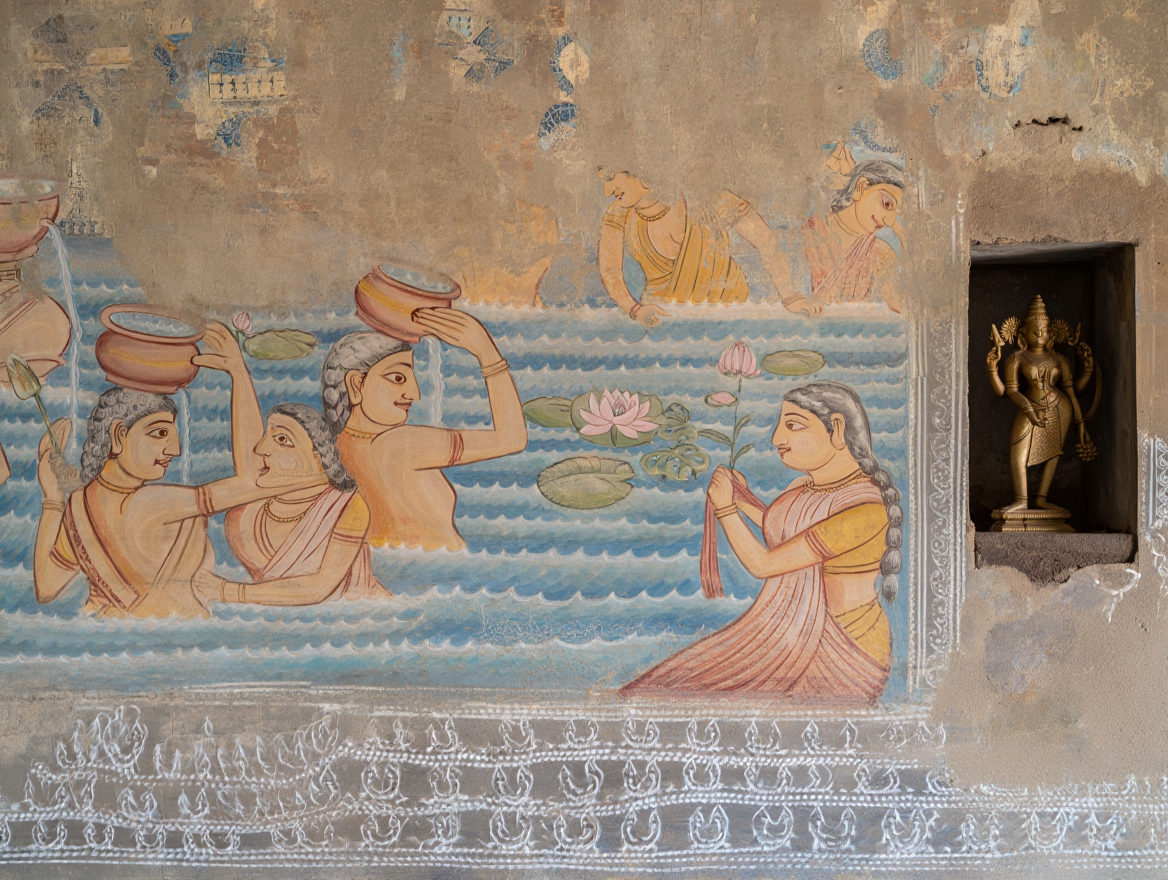
**நீர்** is Proto-Dravidian (DEDR 3690), one of the oldest recoverable Tamil words and one of the most semantically generous. It means water as substance, but it also means quality or nature: a thing's நீர்மை is what it is made of. The Sangam corpus built dense compounds on it — tīm-nīr (sweet water), peyal-nīr (rain water), and most famously செம்புலப் பெயனீர் (cempulap peyaṉīr, 'red earth and pouring rain') in Kuṟuntokai 40, the title-phrase of Tamil's most beloved love poem, after which the poet himself is named. Sanskrit's ஜலம் and வாரி arrived later and took the ritual and medical registers without dislodging the native word. What did dislodge நீர் from everyday speech was an internal Tamil shift: **தண்ணீர்** (tannīr, 'cool water') became the colloquial default. The plain monosyllabic நீர் now lives mostly in writing and compounds. Why the qualifier 'cool' became necessary for the most ordinary word in everyday life is a question worth asking. The answer probably lies somewhere between politeness markers and the everyday experience of South Indian summer.
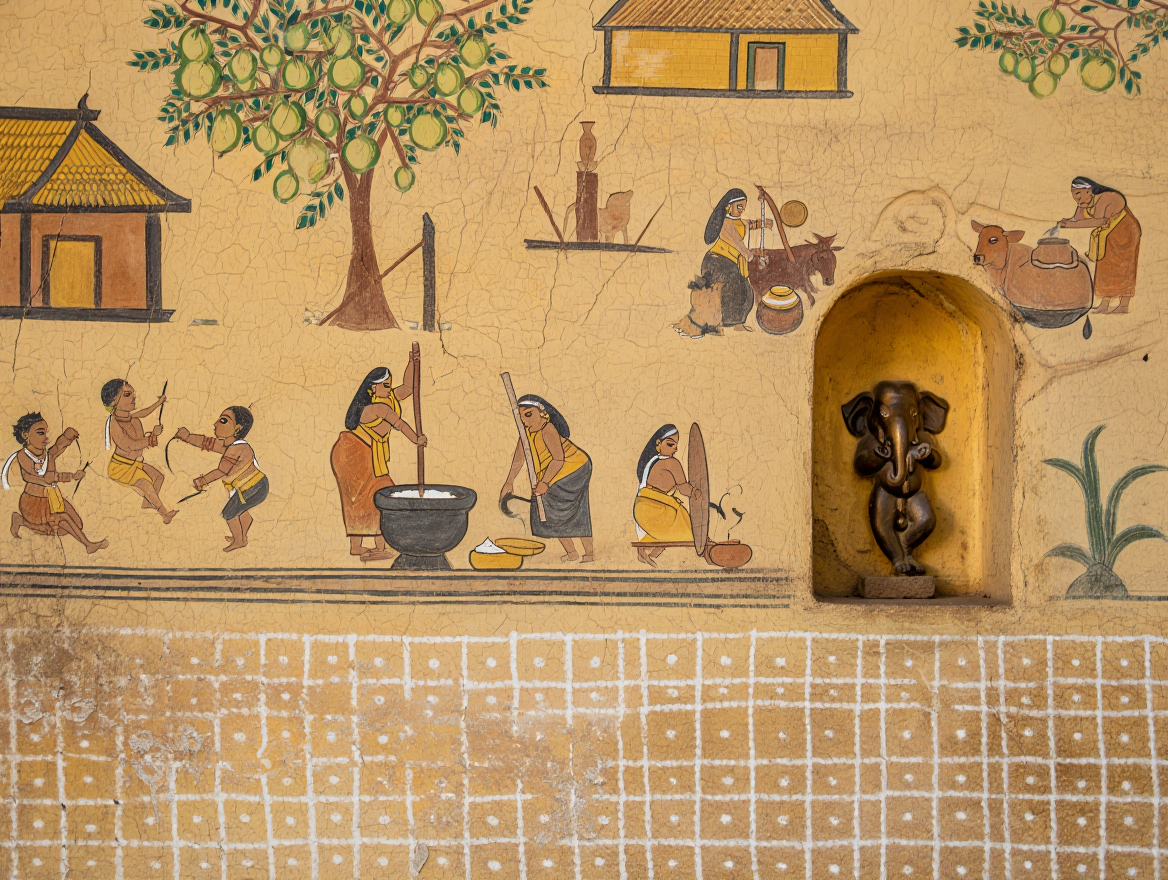
The Tamil word for village is also the Tamil word for one's place. When a Tamil speaker asks where someone is from, the standard phrasing is 'unga ūr enge?' — where is your ūr? It does not specify village or town. The word carries the older Proto-Dravidian sense of any human habitation, the settled place as such, against the wilderness. Krishnamurti's reconstruction puts this plainly: *ūr was the general word, *paḷḷi was the hamlet, *nāṭu was the country. In Sangam akam, the marutam-tiṇai hero is the ūraṉ, the man from the ūr — Kuṟuntokai 8 is the canonical example, where the agricultural village landscape frames the poem's emotional content. The Sanskrit-derived கிராமம் entered later and took the administrative register, leaving ஊர் to keep the intimate one. But ஊர் has a second life that no other Tamil settlement-word has: the universalist reading. Kaṉiyaṉ Pūṅkuṉṟaṉār's Puṟanāṉūṟu 192 opens with the line that has become Tamil's most quoted single verse: யாதும் ஊரே, யாவரும் கேளிர் — every place is my place, everyone is my kin. The same word that means my particular village means every village in the world. The intimate and the universal sit inside the same syllable. G.G. Ponnambalam quoted the couplet at the UN General Assembly in 1966; A.P.J. Abdul Kalam in his speeches; Prime Minister Modi at the UNGA in 2019. Two and a half thousand years after Kaṉiyaṉ wrote it, the line outlived not just the poet but the literary tradition that produced him.
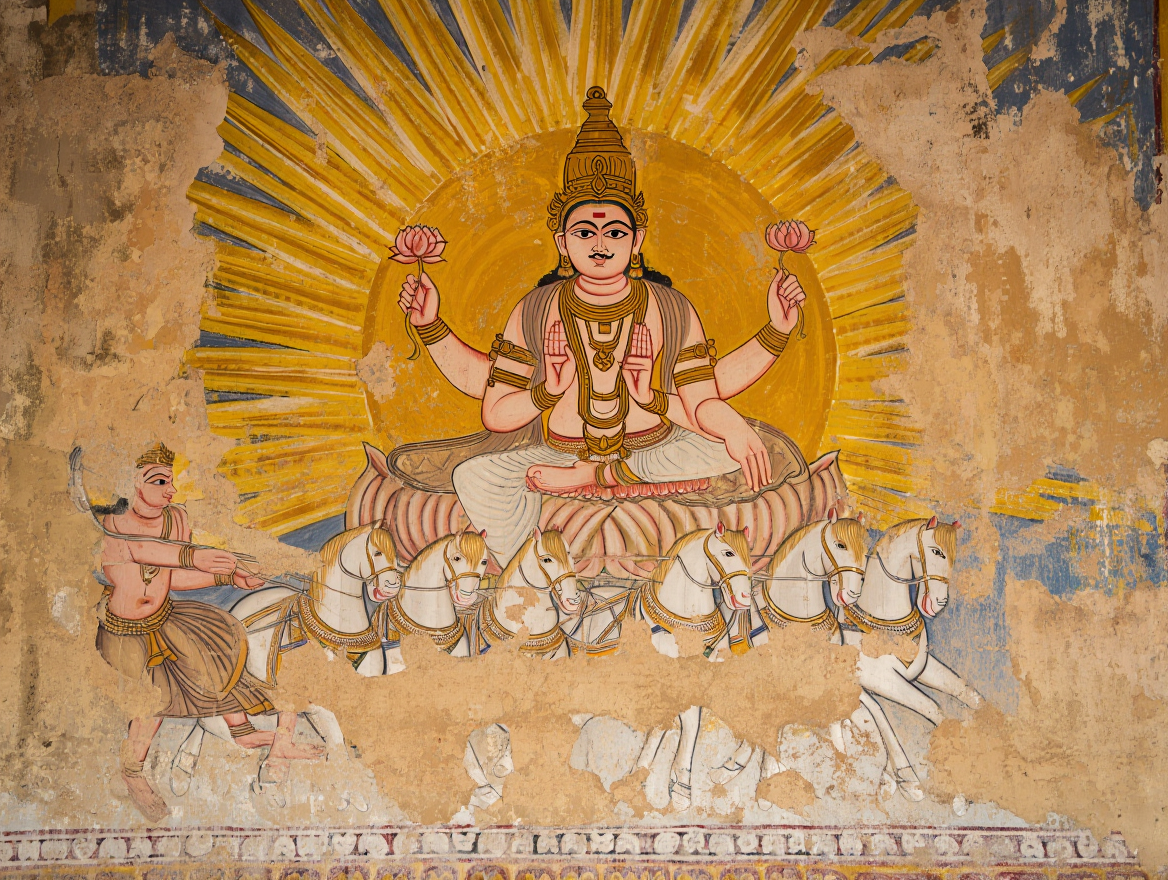
The word விண்மீன் is a small theory of the universe. Whoever coined it looked at the night sky and decided it was an ocean — dark, deep, full of moving things. That decision is encoded permanently in the compound. நட்சத்திரம் is more precise, more useful for navigation and astrology, and carries none of this. The fish got beached somewhere around the medieval period and never found its way back to the water.
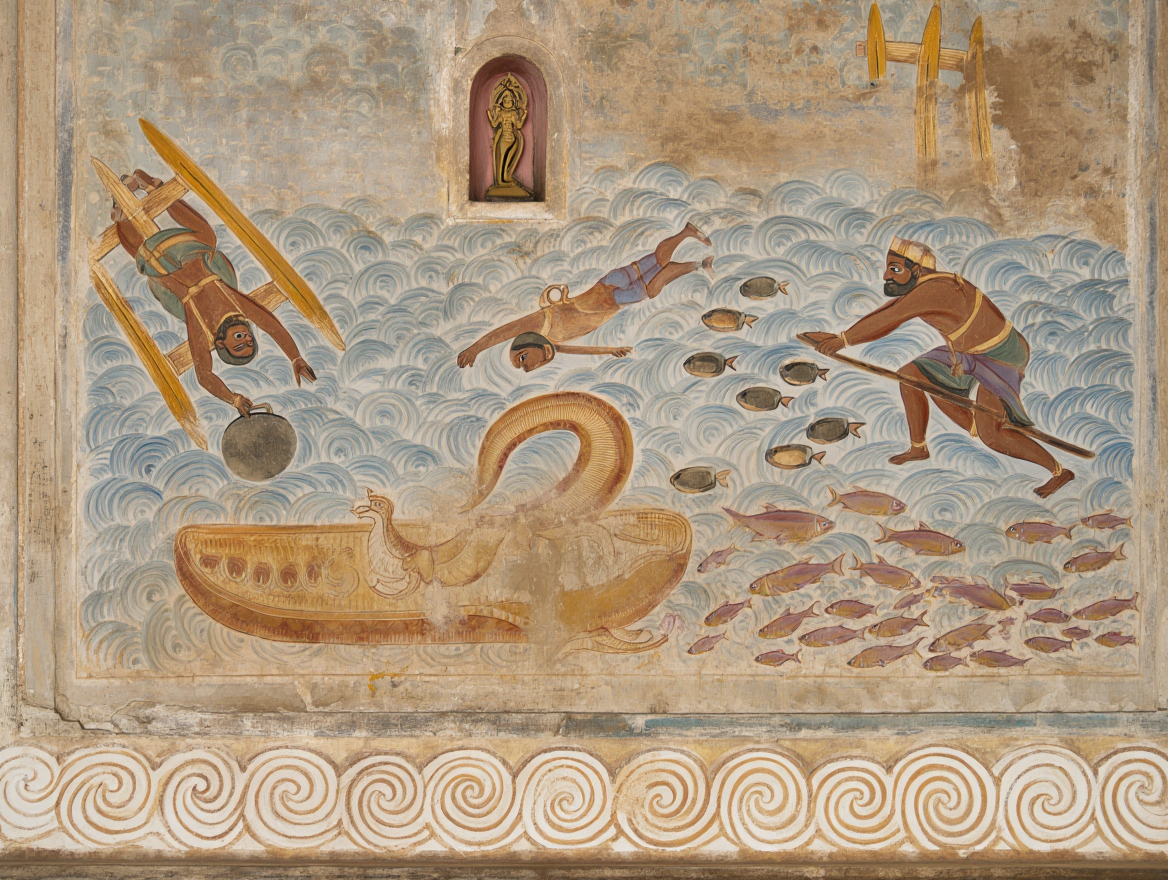
கடல் is the word that did not move. Sanskrit displaced கோ, layered over தேவன், added சந்திரன் beside நிலா. With the sea, the Sanskrit arrivals — சமுத்திரம், சாகரம், வாரிதி, வருணன் — took the cosmic and ritual register and left the everyday word alone. The likely reason is that Tamil sea-life was too continuously lived to permit displacement. Fishermen, merchants, navigators, port-town speakers kept the same water named with the same word. The Sangam neytal-tiṇai poems set their pining-by-the-shore at the same கடல் that modern Tamil children learn the word for. Where political and religious vocabulary changed because political and religious institutions changed, the sea remained the sea.
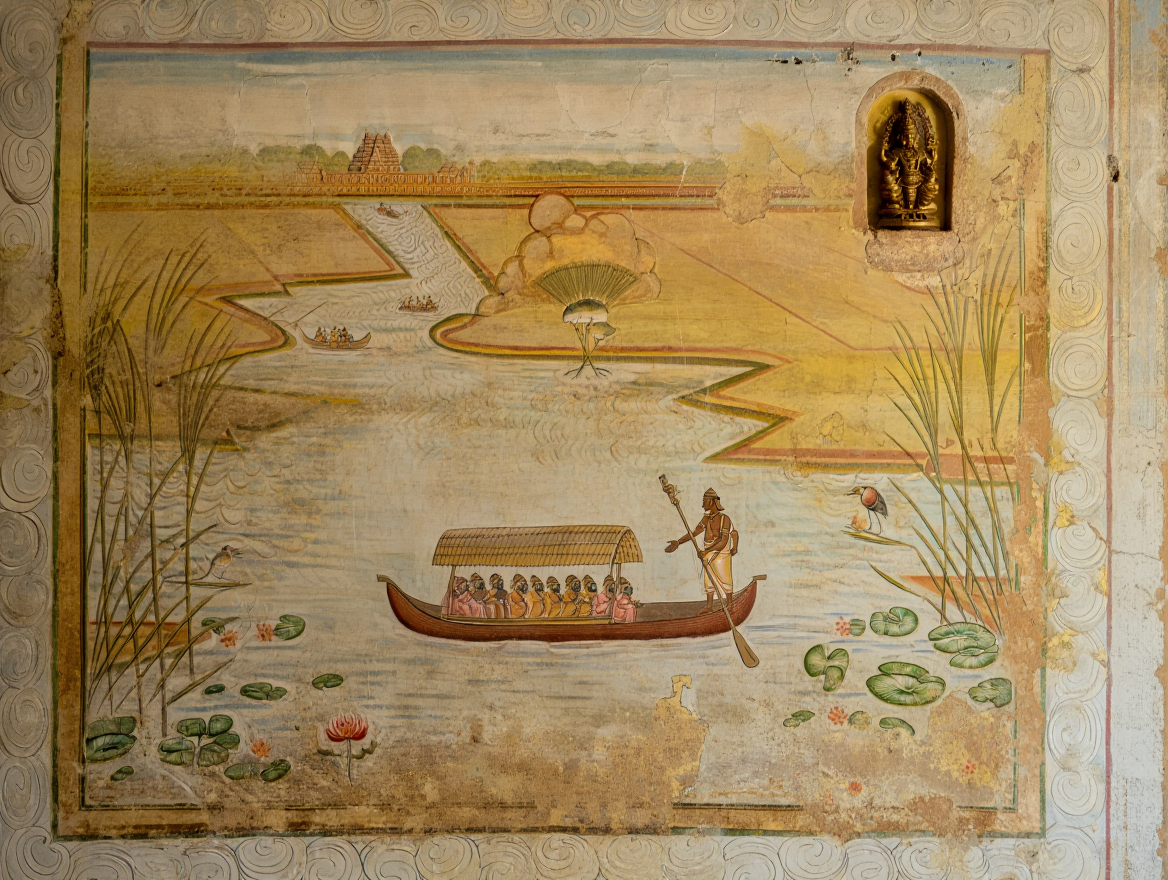
**ஆறு** (*āṟu*) is the everyday Tamil word for river. It comes from Old Tamil **யாறு** (*yāṟu*) and ultimately from Proto-Dravidian *yĀṯu, through a regular Tamil sound change that dropped word-initial *y-. Sangam texts preserve both forms, showing the change underway. The Paripāṭal anthology dedicates an entire cycle of poems (6-7, 10-12, 16, 20, 22) to the Vaiyai river at Madurai, depicting the city's everyday relationship with its river — bathing, water-festivals, lovers' games, sacred ritual. Sanskrit's **நதி** (*nati*) from *nadī* arrived later and took the formal religious register without dislodging the native word. Modern Tamil river-names mostly preserve the native suffix: Periyāṟu, Vaiyai, and others. The most striking structural fact about ஆறு in modern Tamil is its homophony with the number six (ஆறு) and the verb to subside (ஆறு) and the noun for path (ஆறு). The convergence is not accidental sonic punning. The 'river' form descends from PD *yĀṯu through y-deletion; the 'six' form descends from PD *cāṯu through c-deletion. Two distinct Proto-Dravidian etymons fell together by regular sound changes. Whether the path-āṟu and verb-āṟu are similarly distinct etymons or semantic extensions of one root is a question that remains open in this entry.
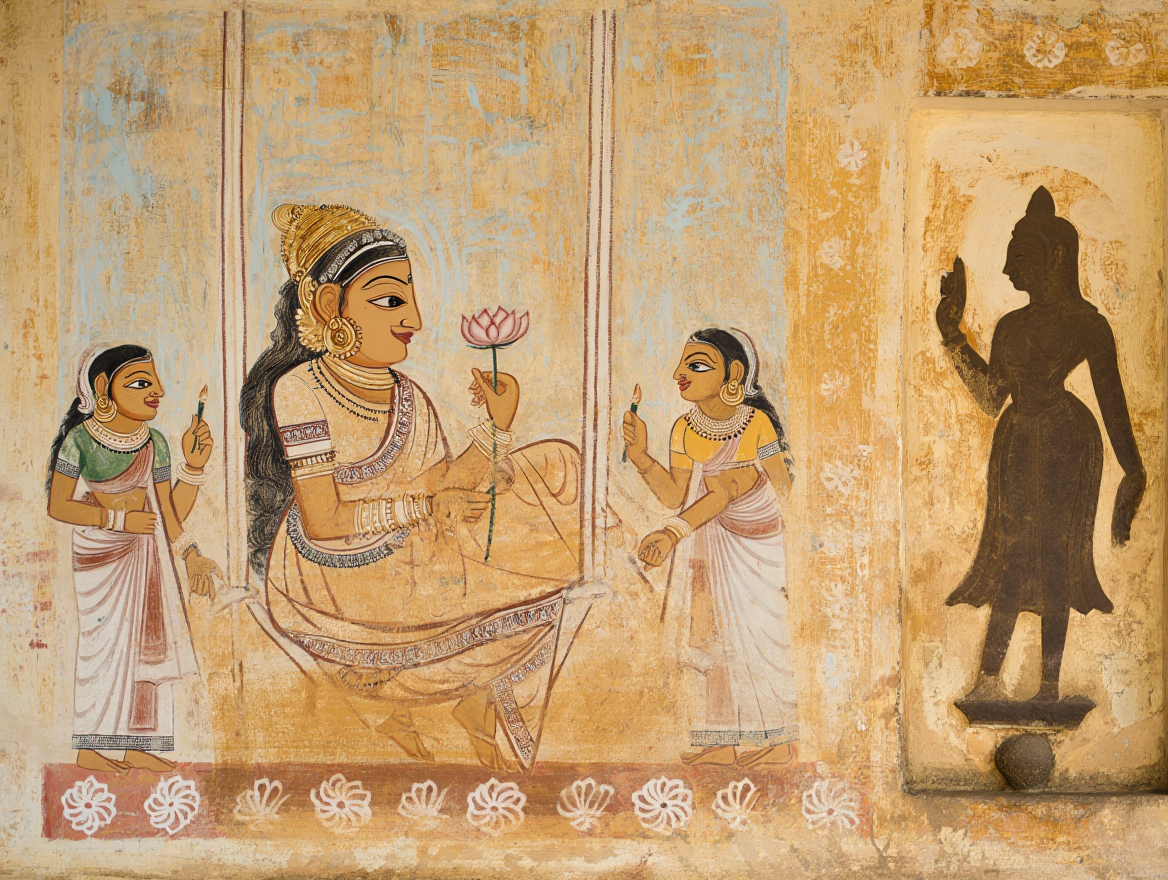
The Tamil queen-word landscape is structurally different from the king-word landscape. Where the king had a thick native thesaurus (கோ, மன்னன், வேந்தன், இறை, ஆண்டவன்) before Sanskrit arrived to add அரசன், the queen had a goddess at the top (கொற்றவை, the victory-personified) and king's-wife formations at the bottom (king's-house-woman, king's-daughter). There was no native queen-as-office word parallel to the king-as-office words. So when Sanskrit's rājñī arrived as அரசி, it filled an empty consort-slot rather than displacing an established native word. Modern Tamil's central queen-word is therefore Sanskrit-derived not by competition but by default. The deeper native figure of sovereign-feminine power — Koṟṟavai, the victorious one, mother and war-goddess of the wasteland — survived as a deity, not as a vocabulary item. The grammar of female sovereignty in Tamil went up into religion, not sideways into administration.
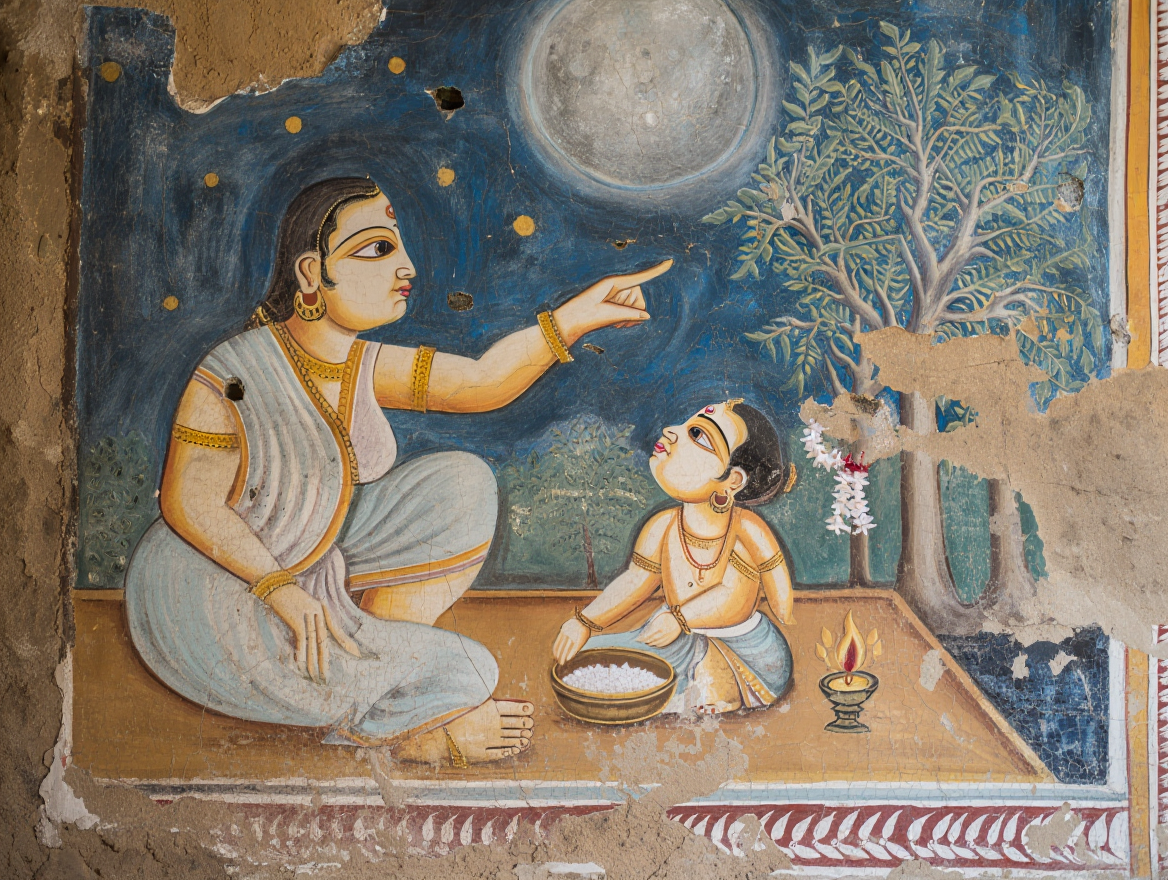
Tamil keeps three moons. நிலா is the soft, lingering one of lullabies, descended directly from Proto-Dravidian *nel-, intimate from its first attestation. திங்கள் is the calendrical moon, the word for the lunar month that now survives mostly as the name of Monday. சந்திரன் is the personified deity inherited through Sanskrit. The Sangam akam tradition reached for நிலவு, not திங்கள், when the moon had to bear emotional weight (Kuṟuntokai 47 is canonical). The most ordinary modern fact is that திங்கள், once a working word for the moon, now lives almost entirely inside a weekday. The folk etymology that derives நிலா from நில் (to abide) is widely repeated but unsupported by comparative Dravidian evidence: the cognates across the family all mean moon, with no abide-semantics anywhere.