ஆறு
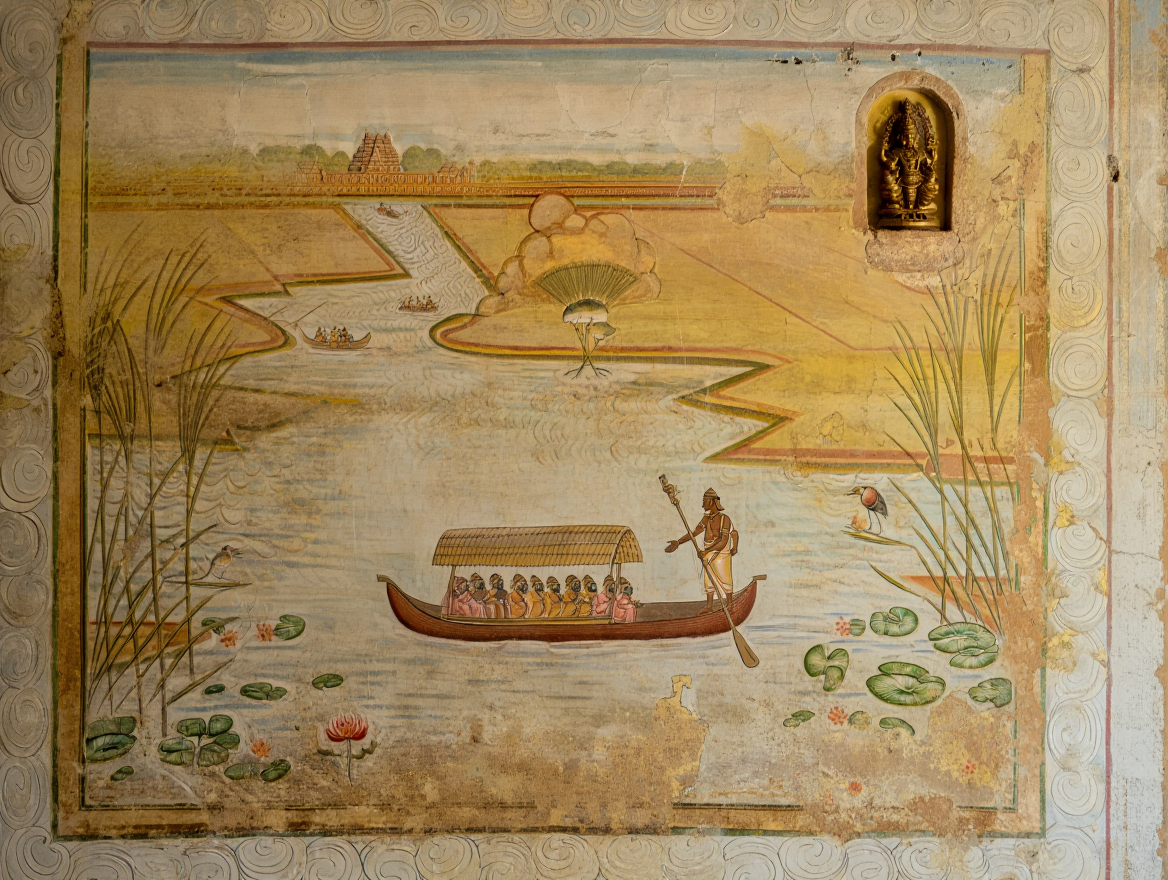
ஆறு (āṟu) is the everyday Tamil word for a river.
It descends from Old Tamil யாறு (yāṟu), and ultimately from Proto-Dravidian *yĀṯu, through a regular Tamil sound change that dropped word-initial *y- in about thirty common nouns. Sangam-era texts preserve both forms (yāṟu and āṟu), showing the change in progress. The same y-loss explains modern Tamil ஆண்டு (year) from older யாண்டு, ஆடு (goat) from யாடு, ஆமை (tortoise) from யாமை. Krishnamurti (2003) documents the change in detail.
The Sangam corpus uses ஆறு densely, but the most concentrated literary treatment of a single river is in the Paripāṭal, where an entire cycle of poems — numbers 6-7, 10-12, 16, 20, and 22 — is devoted to the Vaiyai (modern Vaigai), the river that runs through Madurai. The Paripāṭal Vaiyai cycle depicts the river as a living presence in urban life: townspeople bathing in the flood season, lovers playing in the water, the river as the site of festival, eros, and sacred ritual. The river is not a setting; it is a co-participant. Elizabeth Segran and V.N. Muthukumar’s 2014 translation, The River Speaks, makes this corpus accessible in English.
Sanskrit’s நதி (nati, from nadī) arrived later, in the Bhakti era, and took the formal religious register. நதி is what you call the Ganga and the Yamuna, the personified-feminine sacred rivers of pan-Indian religious geography. ஆறு is what you call the river you grew up beside. Tamil river-names mostly preserve the native suffix: Periyāṟu, Vaiyai, others. Sanskrit’s nati is for the formal contexts native ஆறு was felt to be too domestic for.
The most striking modern fact about ஆறு is its homophony. The same form means river, six, a path or way, and (as a verb) to subside or to cool. ஆறு பேர் ஆற்றில் ஆறு வழியில் ஆறினார்கள் is a Tamil tongue-twister that uses four senses in one breath.
The convergence is not accidental. The “river” form descends from Proto-Dravidian *yĀṯu through loss of initial *y-. The “six” form descends from Proto-Dravidian *cāṯu through loss of initial *c-. Two distinct Dravidian etymons fell together in modern Tamil because two regular sound changes happened to produce the same surface form. The Tamil phonology page on Wikipedia documents both changes with their Proto-Dravidian reconstructions; the convergence is a textbook case of structural homophony.
What this means is that the river is not a pun on six. They are distinct old words that wear the same coat now. The language preserves both in the same body. Reading any Tamil text aloud, a speaker must hear which ஆறு is meant by context. The context, almost always, does the work. Six people, a river-bank, a path through the forest, a heart that calms: each ஆறு arrives knowing which one it is, even after a thousand years of homophonic erosion.
This is the river that flows through the language itself.
Etymology phylogeny
Time runs left to right. Solid lines mark descent; dashed lines mark semantic borrowing.