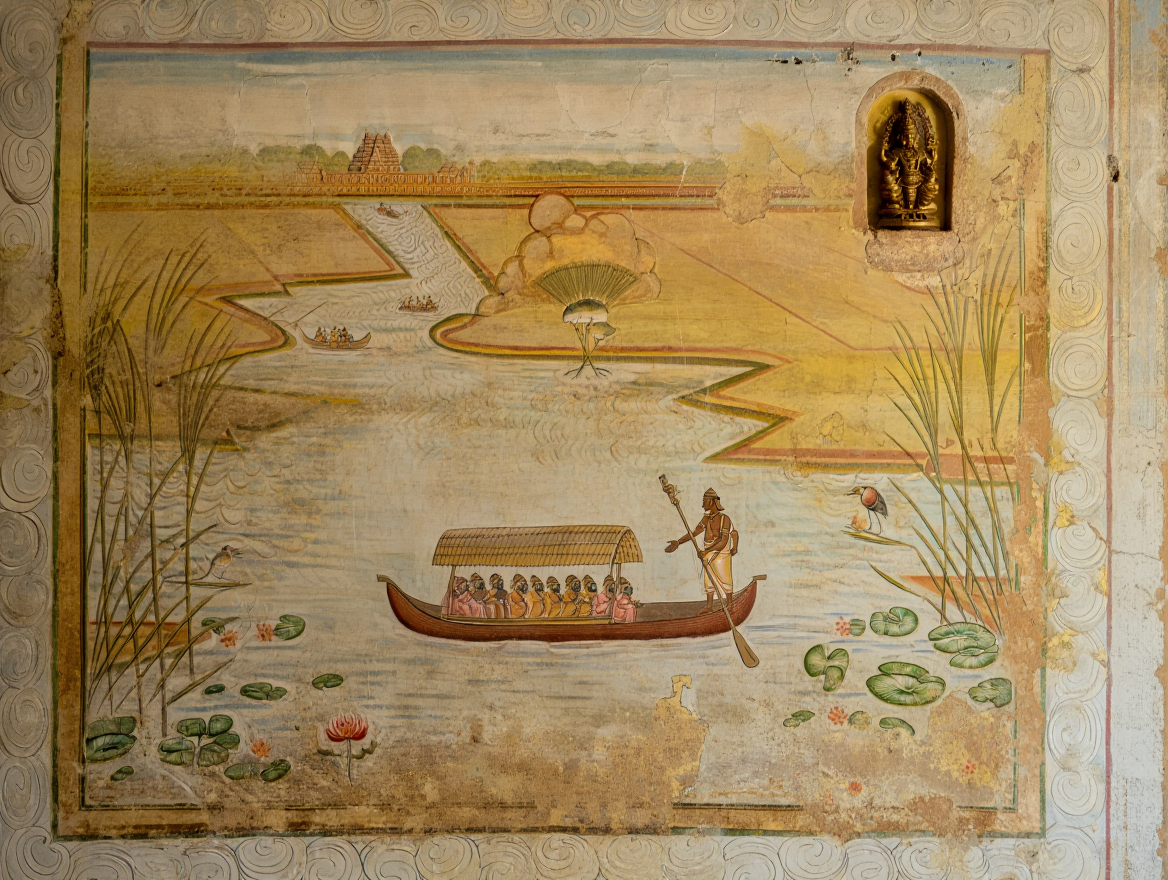
**ஆறு** (*āṟu*) is the everyday Tamil word for river. It comes from Old Tamil **யாறு** (*yāṟu*) and ultimately from Proto-Dravidian *yĀṯu, through a regular Tamil sound change that dropped word-initial *y-. Sangam texts preserve both forms, showing the change underway. The Paripāṭal anthology dedicates an entire cycle of poems (6-7, 10-12, 16, 20, 22) to the Vaiyai river at Madurai, depicting the city's everyday relationship with its river — bathing, water-festivals, lovers' games, sacred ritual. Sanskrit's **நதி** (*nati*) from *nadī* arrived later and took the formal religious register without dislodging the native word. Modern Tamil river-names mostly preserve the native suffix: Periyāṟu, Vaiyai, and others. The most striking structural fact about ஆறு in modern Tamil is its homophony with the number six (ஆறு) and the verb to subside (ஆறு) and the noun for path (ஆறு). The convergence is not accidental sonic punning. The 'river' form descends from PD *yĀṯu through y-deletion; the 'six' form descends from PD *cāṯu through c-deletion. Two distinct Proto-Dravidian etymons fell together by regular sound changes. Whether the path-āṟu and verb-āṟu are similarly distinct etymons or semantic extensions of one root is a question that remains open in this entry.
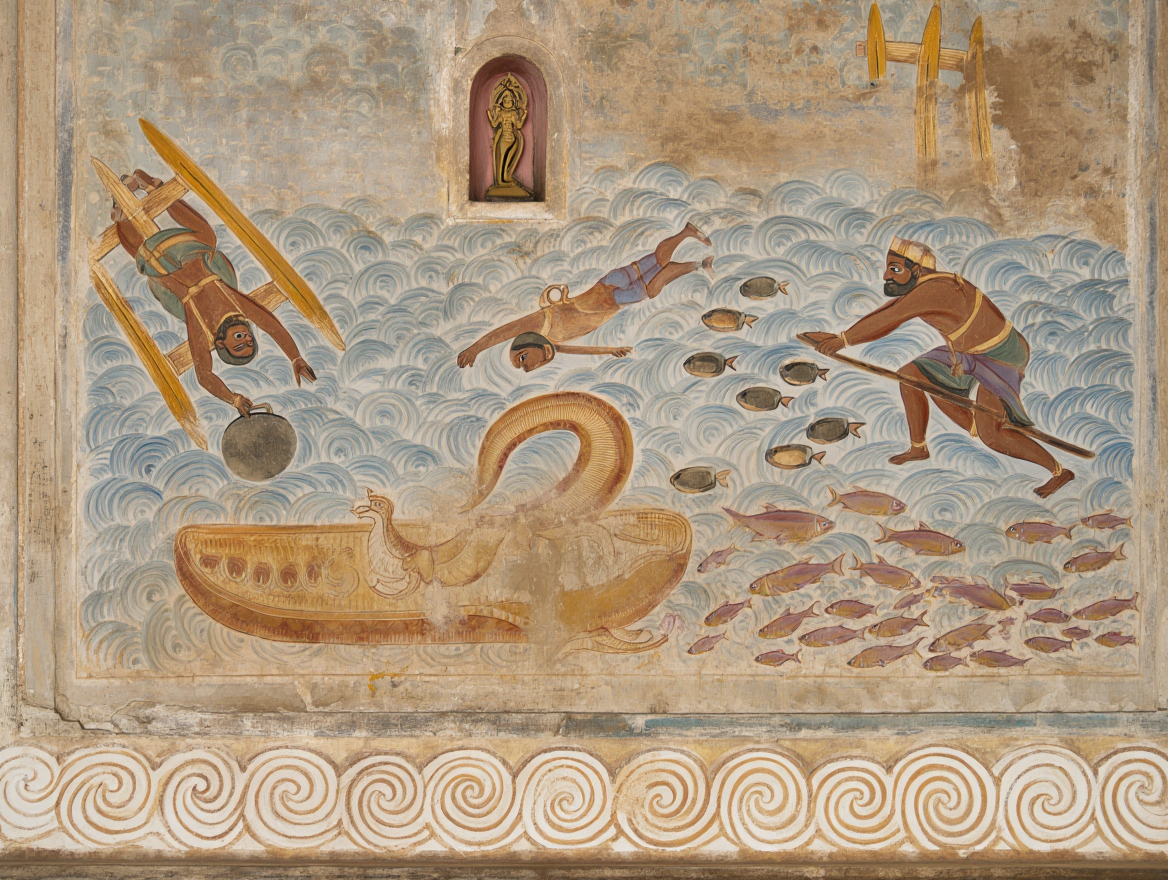
கடல் is the word that did not move. Sanskrit displaced கோ, layered over தேவன், added சந்திரன் beside நிலா. With the sea, the Sanskrit arrivals — சமுத்திரம், சாகரம், வாரிதி, வருணன் — took the cosmic and ritual register and left the everyday word alone. The likely reason is that Tamil sea-life was too continuously lived to permit displacement. Fishermen, merchants, navigators, port-town speakers kept the same water named with the same word. The Sangam neytal-tiṇai poems set their pining-by-the-shore at the same கடல் that modern Tamil children learn the word for. Where political and religious vocabulary changed because political and religious institutions changed, the sea remained the sea.
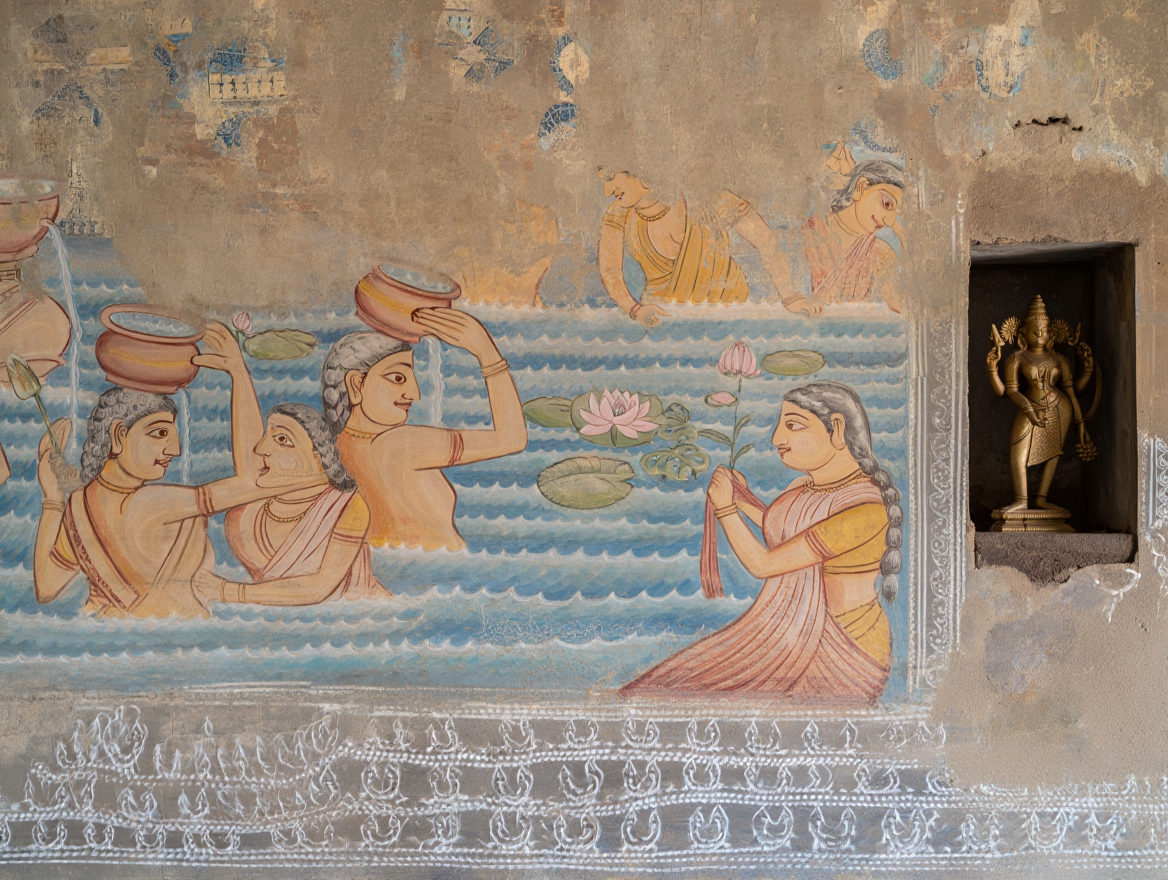
**நீர்** is Proto-Dravidian (DEDR 3690), one of the oldest recoverable Tamil words and one of the most semantically generous. It means water as substance, but it also means quality or nature: a thing's நீர்மை is what it is made of. The Sangam corpus built dense compounds on it — tīm-nīr (sweet water), peyal-nīr (rain water), and most famously செம்புலப் பெயனீர் (cempulap peyaṉīr, 'red earth and pouring rain') in Kuṟuntokai 40, the title-phrase of Tamil's most beloved love poem, after which the poet himself is named. Sanskrit's ஜலம் and வாரி arrived later and took the ritual and medical registers without dislodging the native word. What did dislodge நீர் from everyday speech was an internal Tamil shift: **தண்ணீர்** (tannīr, 'cool water') became the colloquial default. The plain monosyllabic நீர் now lives mostly in writing and compounds. Why the qualifier 'cool' became necessary for the most ordinary word in everyday life is a question worth asking. The answer probably lies somewhere between politeness markers and the everyday experience of South Indian summer.