கேளிர்
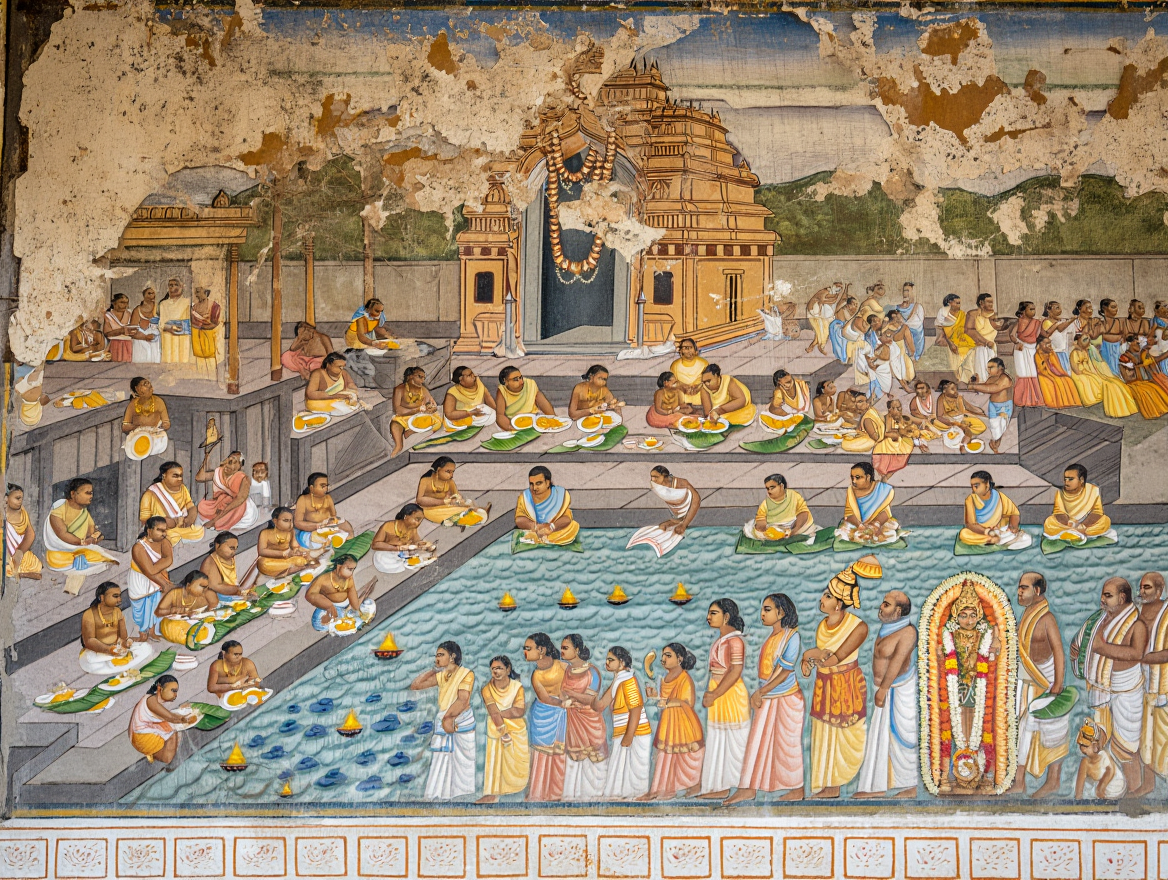
The Tamil word for kin is also Tamil’s word for everyone.
கேளிர் (kēḷir) is the kin-side counterpart to ஊர் in Kaṉiyaṉ Pūṅkuṉṟaṉār’s couplet, the most famous line in Tamil literature. யாதும் ஊரே, யாவரும் கேளிர் (yāthum ūrē, yāvarum kēḷir): every place is my place, everyone is my kin. The two words bear the universalising stretch in the same grammatical breath. Where ஊர் expands from one’s particular village to every village, கேளிர் expands from one’s particular kin to every person. Same move, different axis.
கேளிர் derives from the root கேள் (kēḷ), a Proto-Tamil kin-root that yields a whole family of related words: கேள் (kēḷ, relation), கேள்வன் (kēḷvaṉ, husband), கேண்மை (kēṇmai, friendship-bond), கேளன் (kēḷaṉ, friend). The -ir suffix is the honorific plural marker, making கேளிர் the plural-honorific “kindred.” Tamil also has a homophonous verb கேள் meaning to hear, to ask, source of words like கேள்வி (kēḷvi, question) — but this is a distinct root, with its inquiring sense marked by the Madras Tamil Lexicon as derived from Sanskrit gēṣa. The two கேள் roots fell together by sound-coincidence the same way ஆறு (river) and ஆறு (six) did, as the river entry traces.
The Madras Tamil Lexicon (via agarathi.com) records கேளிர் with three Sangam-attested senses. The first is friends, chosen companions — citing Pattuppāṭṭu’s Porunararruppadai line 74: kēḷir pōlak kēḷkoḷal vēṇṭi, “wishing to be received as if kin.” The second is relations, blood-kin — citing Puṟanāṉūṟu 42 line 17: vaṉpulak kēḷirkku varuvirun thayarum, “preparing hospitality for kin who come from the harsh-land country.” The third, in the singular: husband, master of the house — citing Tolkāppiyam. One word holding intimate marriage, chosen friendship, blood-kin, and the universal claim of Kaṉiyaṉ’s couplet.
Kuṟuntokai 40 — Tamil’s most beloved akam poem, the “red earth and pouring rain” verse by Cempulappeyaṉīrār that the water entry quotes — opens with the question: எந்தையும் நுந்தையும் எம்முறைக் கேளிர் (entaiyum nuntaiyum emmuṟaik kēḷir), “in what manner are my father and your father kēḷir to each other?” The lovers have no prior kinship between their families. The poem’s answer is the famous declaration: like rain-water mingling with red earth, our love-merged hearts have made the kinship anew. Where there was no kēḷir, the bond of love produces one. The word holds both the question and its answer.
Sanskrit’s arrivals — குடும்பம் (kuṭumpam, from kuṭumba, family-household), ஞாதி (ñāti, from jñāti, legal kinsman), பந்தம் (pantam, from pāśa, bond), சொந்தம் (contam, from svatva, one’s own) — did not displace கேளிர் so much as specialise around it. குடும்பம் took the administrative-household register, the unit that appears on government forms. ஞாதி took the legal-dharmic register of inheritance and lineage. பந்தம் took the emotional-spiritual register of attachment. சொந்தம் took the register of ownership and belonging. கேளிர் itself retreated to literary and Sangam-pedagogical use, surviving in everyday Tamil mostly through the famous couplet that gave it its modern afterlife.
That afterlife is unusually rich. யாவரும் கேளிர் is engraved on Tamil school walls, printed on Tamil Nadu government communications, quoted in political speeches, adopted as a diaspora motto. G.G. Ponnambalam invoked it at the United Nations General Assembly in 1966. A.P.J. Abdul Kalam quoted it across his presidency. Prime Minister Modi recited it at the UNGA in 2019. The full couplet has become the Tamil people’s universalist motto, the line everyone knows.
One Chennai instantiation deserves recording for the lexicon. Kaylir Canteen at 9 C.I.T. Colony, Mylapore, opened in 2023 by Bhargav and Dhanya, takes its name directly from the second hemistich of Puṟanāṉūṟu 192. The romanisation varies (Kaylir, Keylir, Kelir) but all transliterate கேளிர். The front wall carries the full couplet as graffiti. The canteen serves வீட்டு சாப்பாடு (veeṭṭu cāppāṭu, home cooking) on a self-service model, with sustainability and community as stated principles. The founders describe the name’s intent simply: Kaylir signifies bringing people together. As one Tripadvisor reviewer noted: “Keylir is not a restaurant or canteen, it is home away from home… Keylir means friends or family in Tamil.”
The structural fact: a Sangam-era universalist claim, two and a half millennia after Kaṉiyaṉ first wrote it, has become a working canteen. The poem has produced a real building where strangers are received as kin. This is what the word does when it is allowed to do its work. யாவரும் கேளிர் was never an abstract philosophical assertion. It was always an instruction.
What கேளிர் means is what Kaylir Canteen practices: the proposition that anyone who arrives can be received as if they belonged. The semantic move from particular-kin to universal-kin is not metaphor. It is method. Tamil holds the local word and stretches it to include the stranger, and the result is hospitality — both the literary kind that produces poems and the practical kind that produces canteens.
Two thousand five hundred years, and the word still does what it was made to do.
Etymology phylogeny
Time runs left to right. Solid lines mark descent; dashed lines mark semantic borrowing.