Recent words
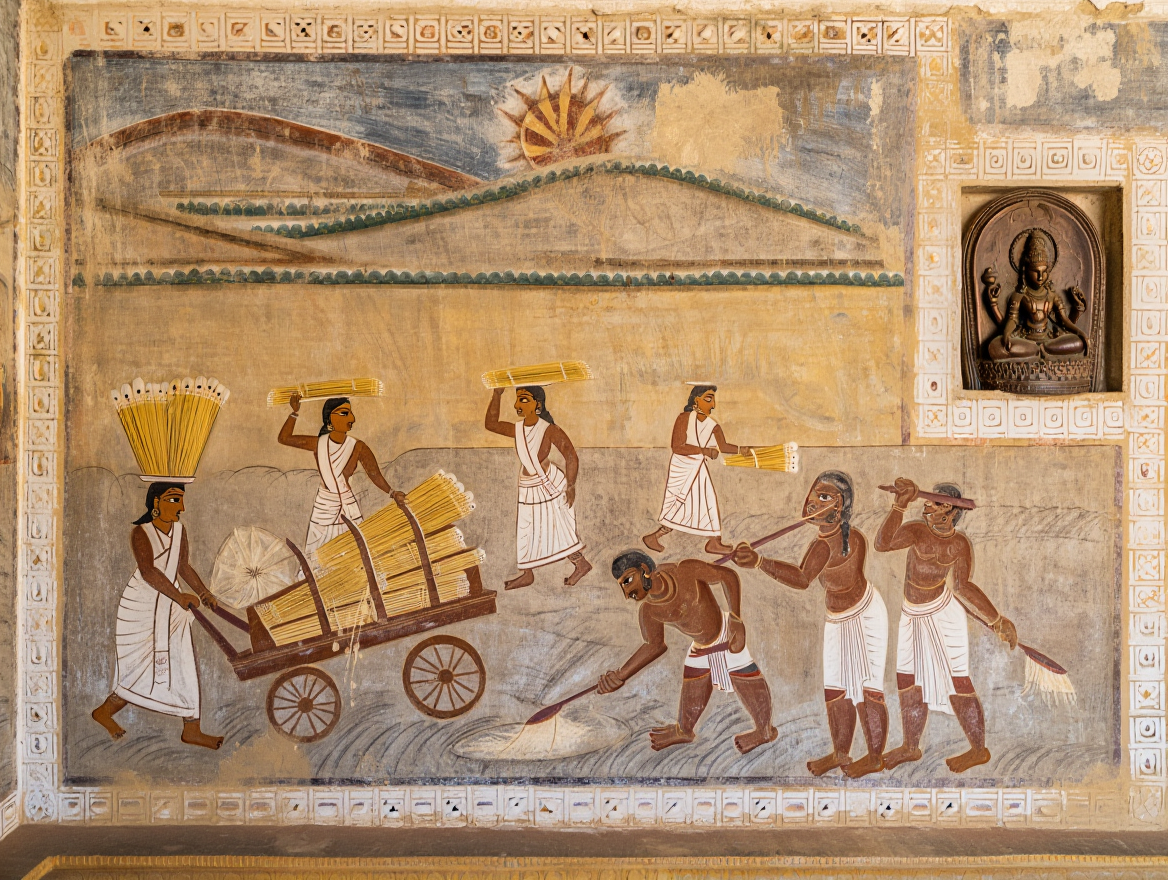
Madurai is named after a tree. The Pandyan capital, seat of the Tamil Sangam, city of the Mīnākṣi temple, gets its name from மருதத்துறை (marudattuṟai), the landing-place of the marudu trees on the banks of the Vaigai. The marudu — identified by the Madras Tamil Lexicon as Terminalia alata (König), the black-barked riverside tree known in Tamil as கருமருது — is the namesake of the marutam tiṇai, the cultivated riverine landscape of Sangam akam grammar. The tree gives its name to the landscape; the landscape gives its name to a city; the city becomes the literary capital of Tamil itself. Of the five Sangam tiṇai, marutam is uniquely the landscape of married love and its cycles. The Madras Tamil Lexicon defines marutam-akam not as 'lover's quarrel' but more precisely as 'enjoying union after sulking' (ஊடியுங் கூடியும் போகம் நுகர்வது) — the sulk is instrumental, the reconciliation completes it. Where kuṟiñci is union and mullai is waiting and pālai is separation and neytal is pining, marutam is the only landscape whose canonical action is internal to the household: the husband returning from the paratta-concubine, the wife performing ūṭal, the friend mediating, the reconciliation arriving. Kuṟuntokai 8 is the textbook poem: the concubine voicing her grievance within hearing of the wife's circle. The Tolkāppiyam codifies the framework in Poruḷatikāram sūtra 6; Aiṅkuṟunūṟu 74 and Ciṟupāṇāṟṟuppaṭai 186 attest the tree-on-the-riverbank as canonical Sangam image. Tamil folk-naming has long applied 'marutu' to multiple Terminalia species — T. alata (கருமருது, the tiṇai-namesake) and T. arjuna (வெண்மருது, the heart-medicine tree of Siddha medicine) sit together under the same root — and the older Tamil tradition did not separate them as Linnaean taxonomy now does.
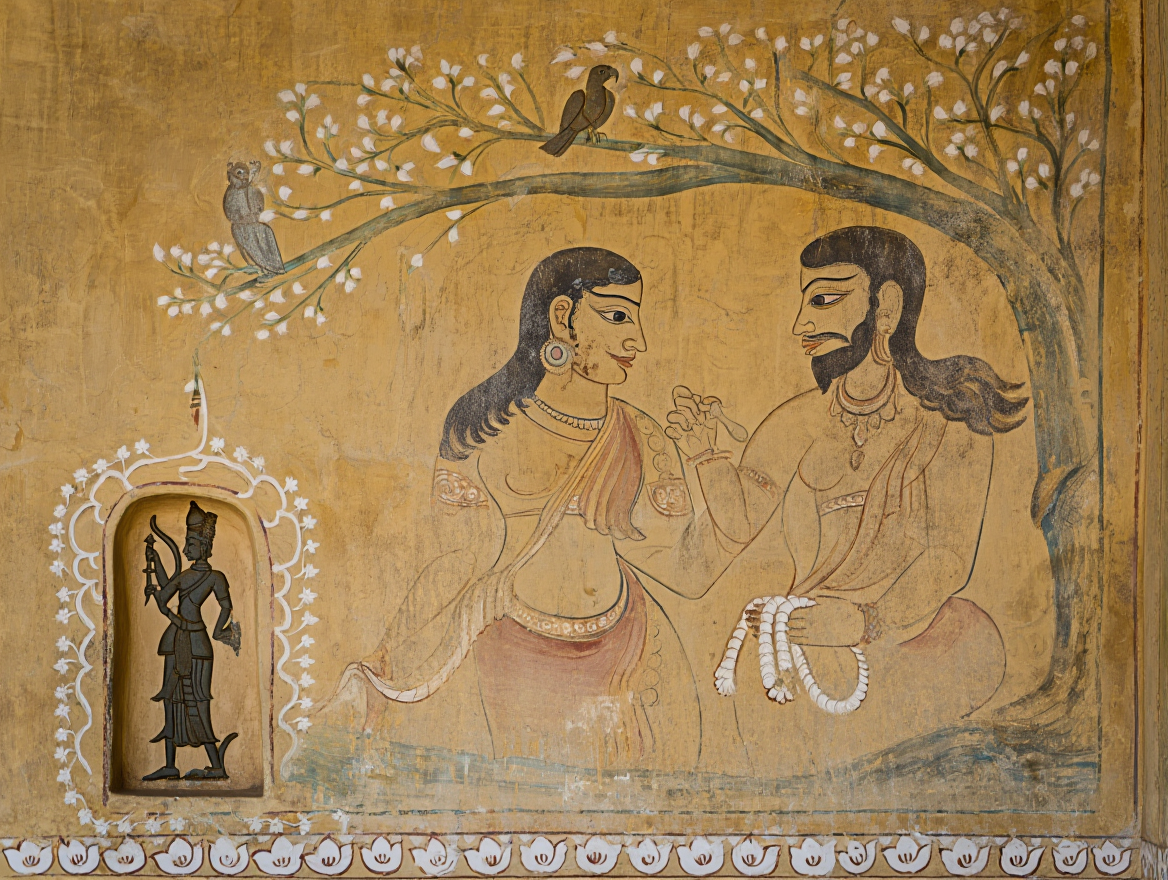
Tamil has many love-words. **காதல்** (kātal) is the oldest and most capacious — derived from a South Dravidian verbal root meaning to desire greatly, to long for, to esteem. **அன்பு** (aṉpu) is love-as-affection, the warm glow that does not need an object. **நட்பு** (naṭpu) is the love between friends. **பாசம்** (pācam, from Sanskrit pāśa, 'bond') is attachment, especially parent-to-child. The Sanskrit arrivals carved out more pointed registers: **காமம்** for desire-as-force, **பிரேமை** for devotional love, **ஆசை** for desire-as-aspiration. The Tolkāppiyam codified the akam grammar that organised all of this into landscapes and phases. What modern Tamil has done is collapse much of this breadth into the cinema-shaped category of romantic love. காதல் now mostly means the love of lovers. The Sangam-era range, where it could also mean reverence and esteem, has thinned out into the older books.
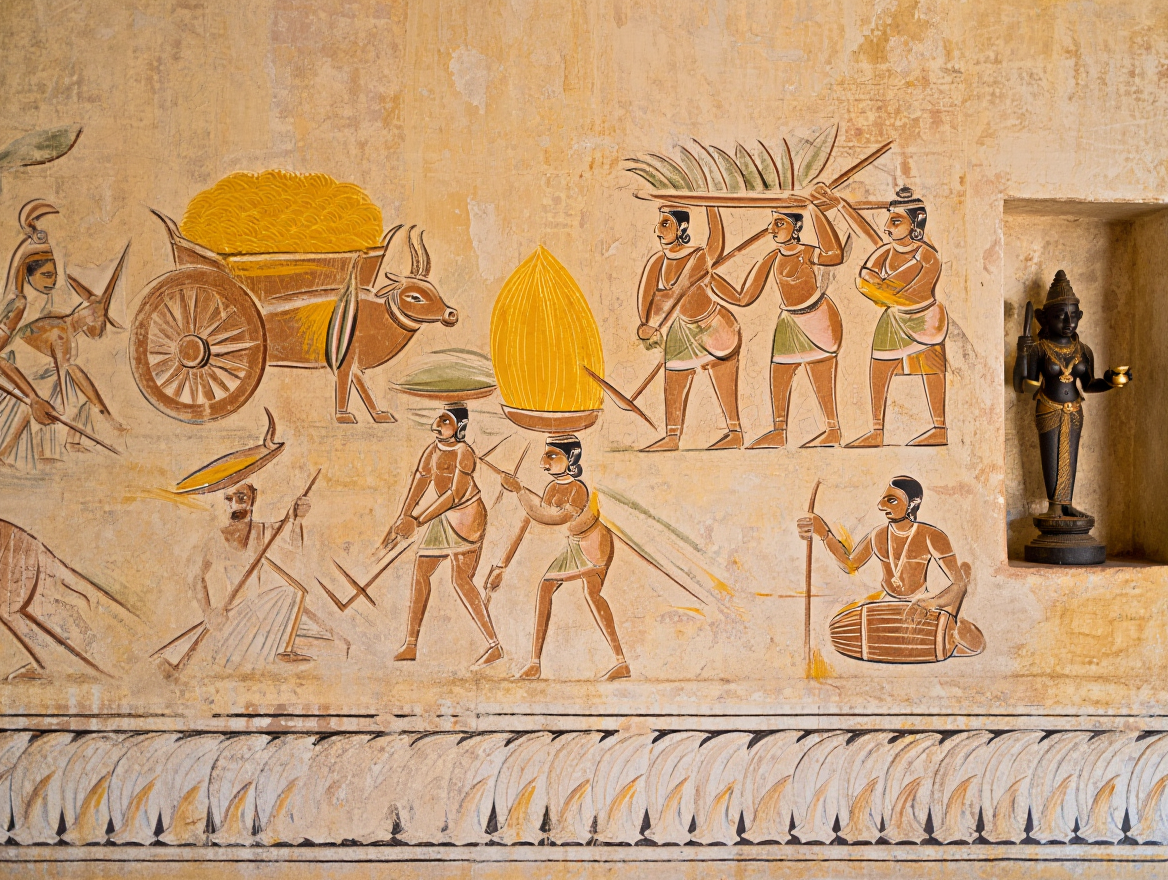
நிலம் is the ground, in every sense the word will allow. It is the soil under foot, the parcel in the deed, the country one is from, the metaphysical substrate of being. The Tolkāppiyam (Poruḷatikāram 4) opens the entire akam poetic system by declaring நிலம் and பொழுது — land and time — as the foundational categories of love poetry. Every Sangam poem is set in a நிலம். The five tiṇais (kuṟiñci, mullai, marutam, neytal, pālai) are five lands, and the same word tiṇai means both 'land' and 'genre' because in Tamil poetics they are not two things. Sanskrit's பூமி arrived later and took the cosmic register (Mother Earth, the planet, the element). நிலம் kept the ground itself. The most ordinary modern fact is that நிலம் has narrowed further: it now usually means property — a plot to buy, sell, or register. The word that once organised emotional life now mostly organises ownership records.
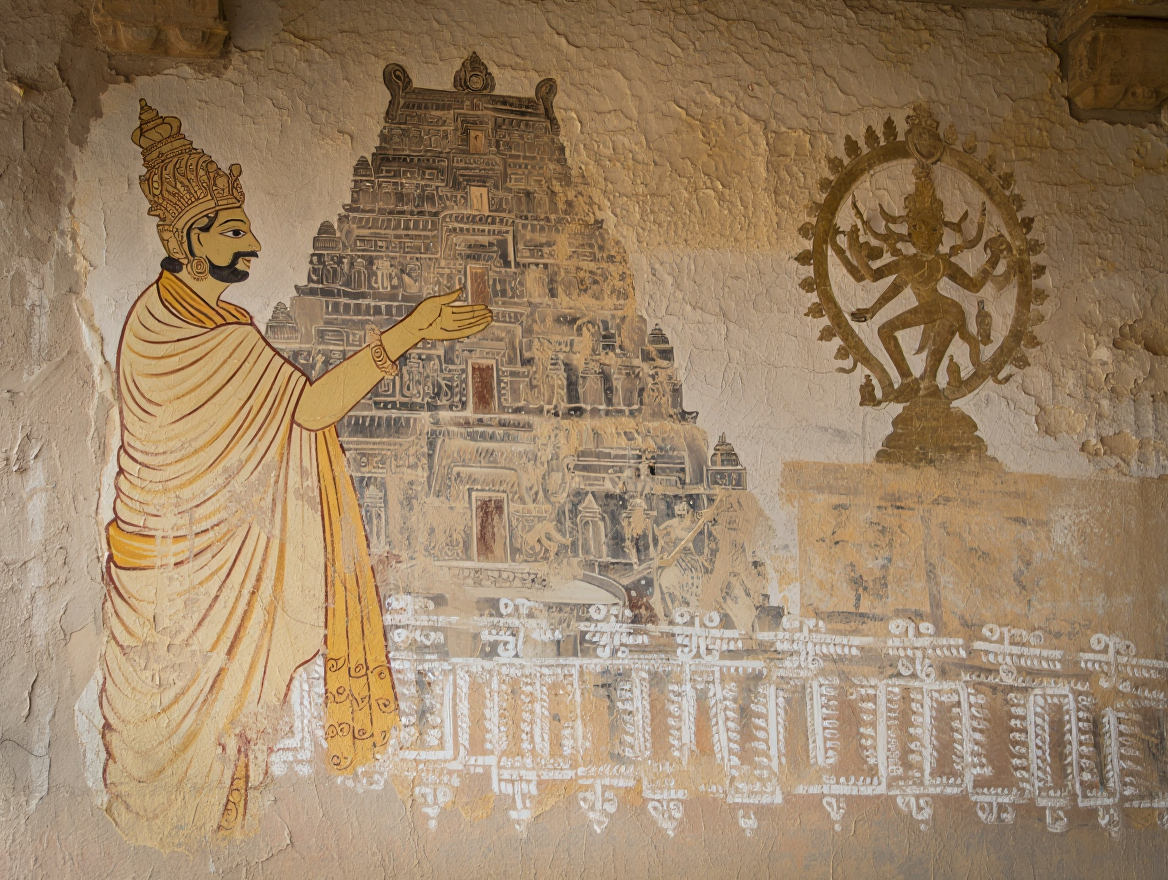
Tamil has more words for king than it has dynasties of king. கோ is the deepest, naming sovereignty itself before naming who holds it. வேந்தன் is the imperial title — reserved for one of the three crowned dynasties, the Cēra, Cōḻa, and Pāṇṭiya. மன்னன் is the office-holder, the king as ruler. இறை and ஆண்டவன் were sovereignty-words that drifted upward into divinity; both are now god-words. அரசன், the Sanskrit-derived borrowing, has become the unmarked modern word, partly because it carries no register weight — it is neither archaic like கோ nor imperial like வேந்தன், just everyday king. The lexicon's interest is the upward drift: the words a culture uses for its local sovereign tend to become, over time, its words for the god.
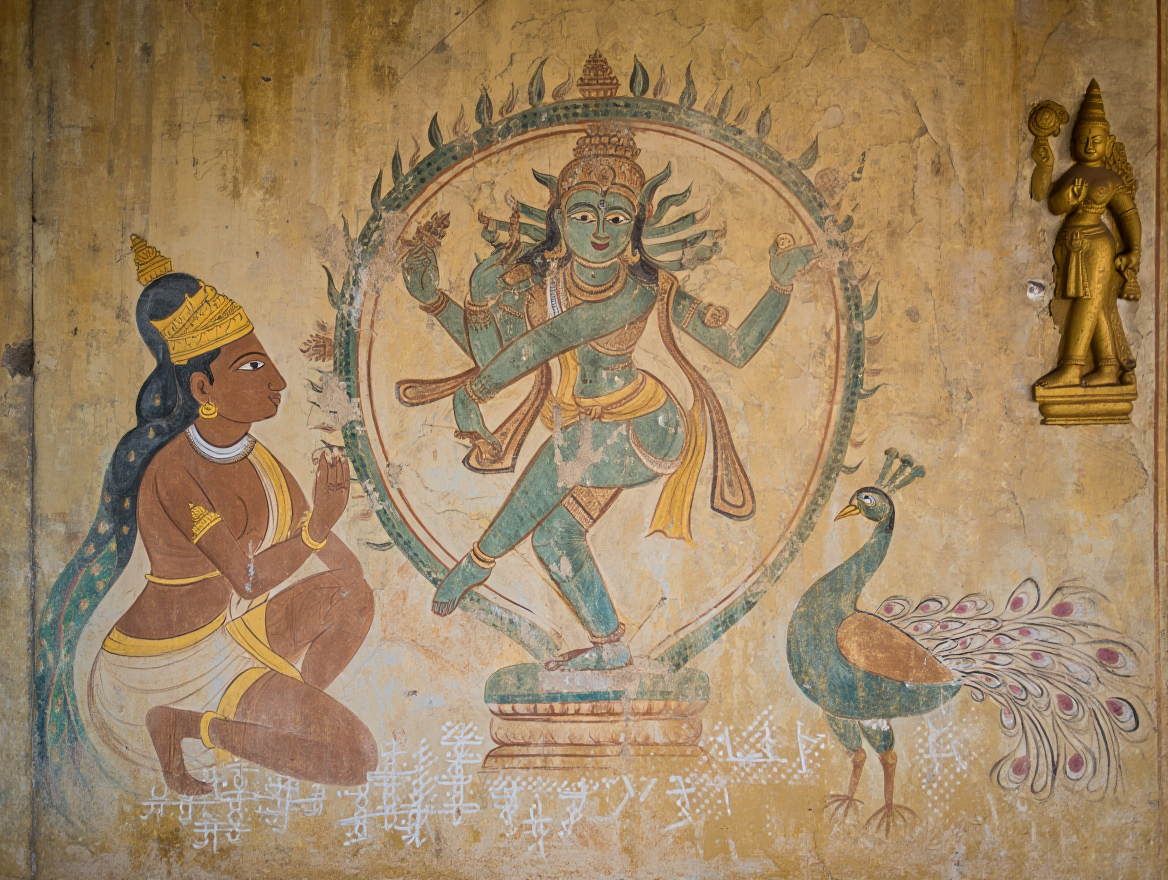
கடவுள் is, almost uniquely among the world's major god-words, a transparent etymological theology. கட (to cross, to be beyond) + உள் (inside, interior). The one who crosses everything and yet is inside everything. Where Sanskrit deva names the bright one and Latin deus the sky-father, Tamil names a metaphysical structure. The Old Kannada cognate kaḍavaḷ confirms the form is native Dravidian. Sanskrit's தேவன், பகவான், ஈஸ்வரன் arrived in successive layers — Brahminical, Jain, then Bhakti-Saiva-Vaishnava — and took specialised registers without displacing கடவுள் from its everyday central position. The Tirukkuṟaḷ's opening chapter shows the layering at work: native கடவுள் as the chapter title, the specifically Jain ஆதி பகவன் (Ādinātha, first Tīrthaṅkara) in the first kuṟaḷ, Tīrthaṅkara iconography in the third, native இறைவன் in the fifth. Valluvar wrote in a multi-religious Tamil that already had three vocabularies of god available. The conceptual centre stayed with the native compound. The vocabulary that holds it is unusually full.