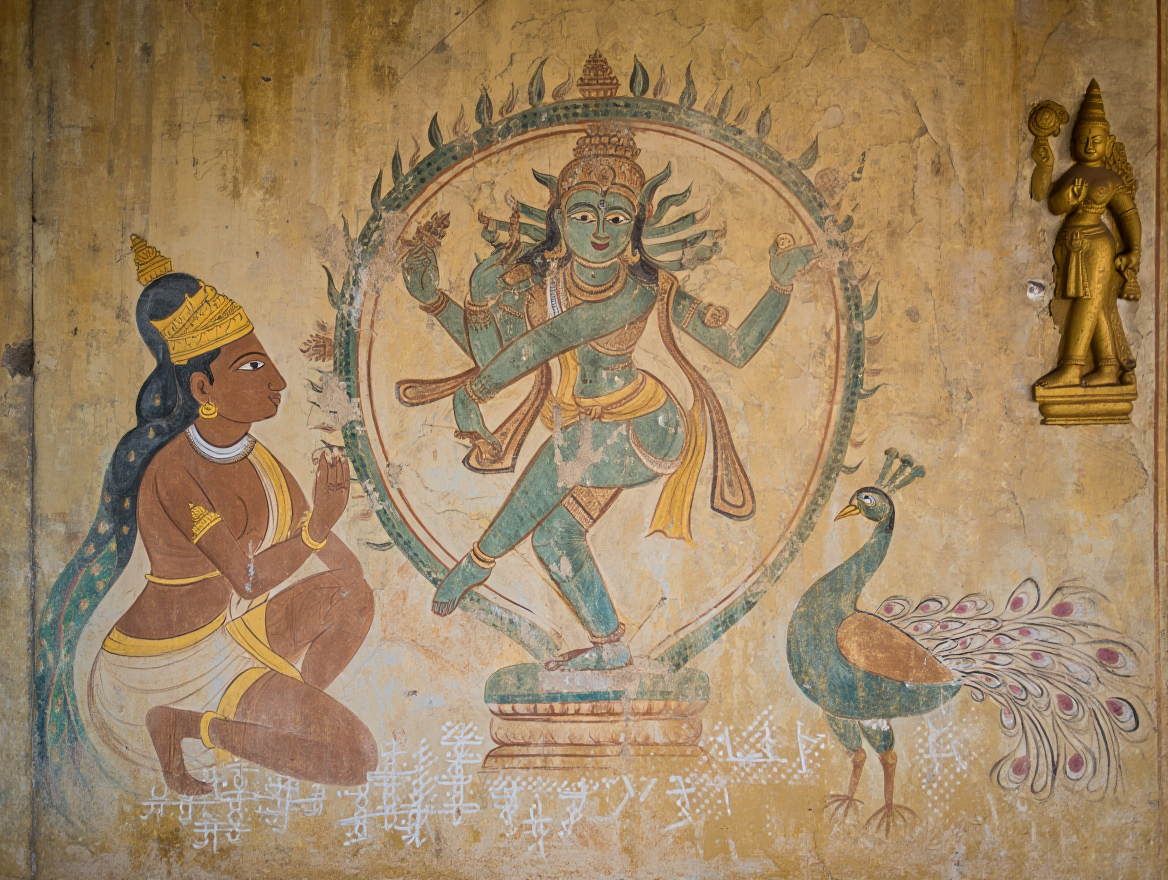
கடவுள் is, almost uniquely among the world's major god-words, a transparent etymological theology. கட (to cross, to be beyond) + உள் (inside, interior). The one who crosses everything and yet is inside everything. Where Sanskrit deva names the bright one and Latin deus the sky-father, Tamil names a metaphysical structure. The Old Kannada cognate kaḍavaḷ confirms the form is native Dravidian. Sanskrit's தேவன், பகவான், ஈஸ்வரன் arrived in successive layers — Brahminical, Jain, then Bhakti-Saiva-Vaishnava — and took specialised registers without displacing கடவுள் from its everyday central position. The Tirukkuṟaḷ's opening chapter shows the layering at work: native கடவுள் as the chapter title, the specifically Jain ஆதி பகவன் (Ādinātha, first Tīrthaṅkara) in the first kuṟaḷ, Tīrthaṅkara iconography in the third, native இறைவன் in the fifth. Valluvar wrote in a multi-religious Tamil that already had three vocabularies of god available. The conceptual centre stayed with the native compound. The vocabulary that holds it is unusually full.
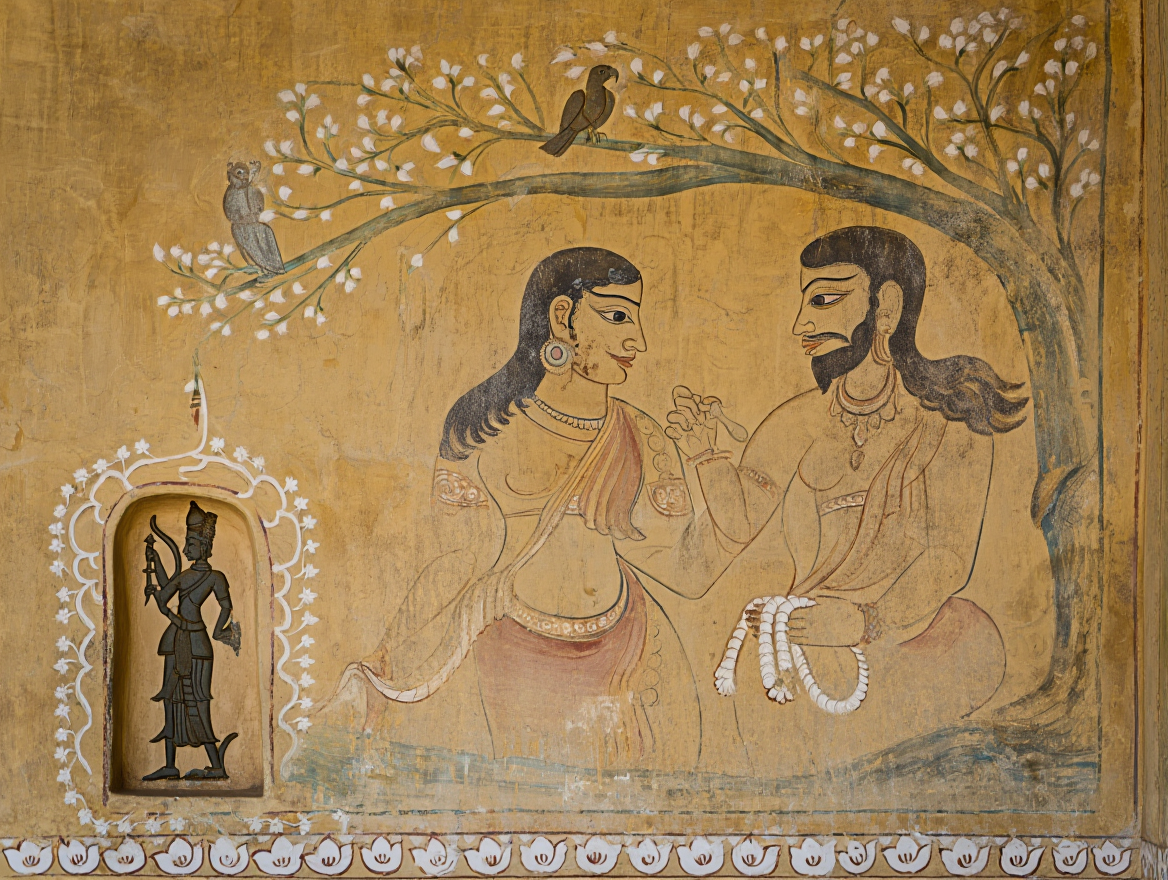
Tamil has many love-words. **காதல்** (kātal) is the oldest and most capacious — derived from a South Dravidian verbal root meaning to desire greatly, to long for, to esteem. **அன்பு** (aṉpu) is love-as-affection, the warm glow that does not need an object. **நட்பு** (naṭpu) is the love between friends. **பாசம்** (pācam, from Sanskrit pāśa, 'bond') is attachment, especially parent-to-child. The Sanskrit arrivals carved out more pointed registers: **காமம்** for desire-as-force, **பிரேமை** for devotional love, **ஆசை** for desire-as-aspiration. The Tolkāppiyam codified the akam grammar that organised all of this into landscapes and phases. What modern Tamil has done is collapse much of this breadth into the cinema-shaped category of romantic love. காதல் now mostly means the love of lovers. The Sangam-era range, where it could also mean reverence and esteem, has thinned out into the older books.