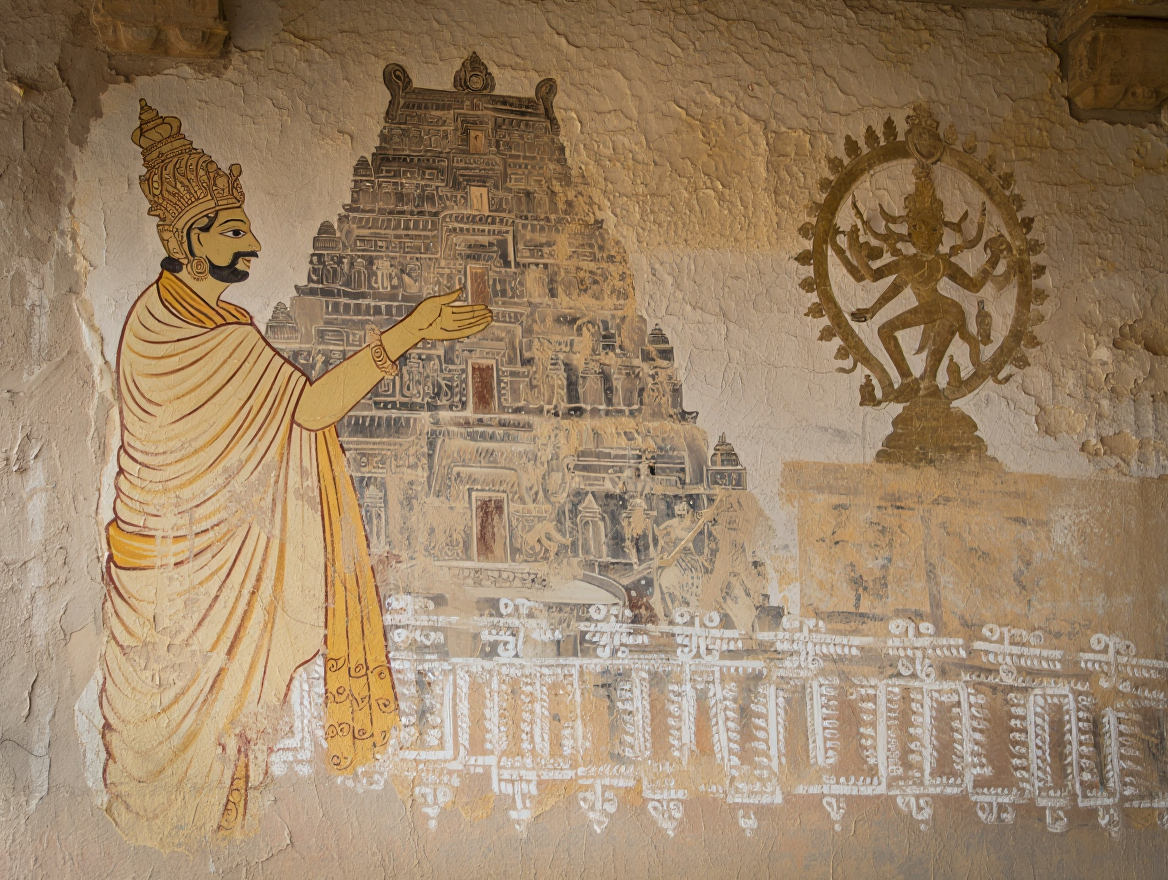
Tamil has more words for king than it has dynasties of king. கோ is the deepest, naming sovereignty itself before naming who holds it. வேந்தன் is the imperial title — reserved for one of the three crowned dynasties, the Cēra, Cōḻa, and Pāṇṭiya. மன்னன் is the office-holder, the king as ruler. இறை and ஆண்டவன் were sovereignty-words that drifted upward into divinity; both are now god-words. அரசன், the Sanskrit-derived borrowing, has become the unmarked modern word, partly because it carries no register weight — it is neither archaic like கோ nor imperial like வேந்தன், just everyday king. The lexicon's interest is the upward drift: the words a culture uses for its local sovereign tend to become, over time, its words for the god.
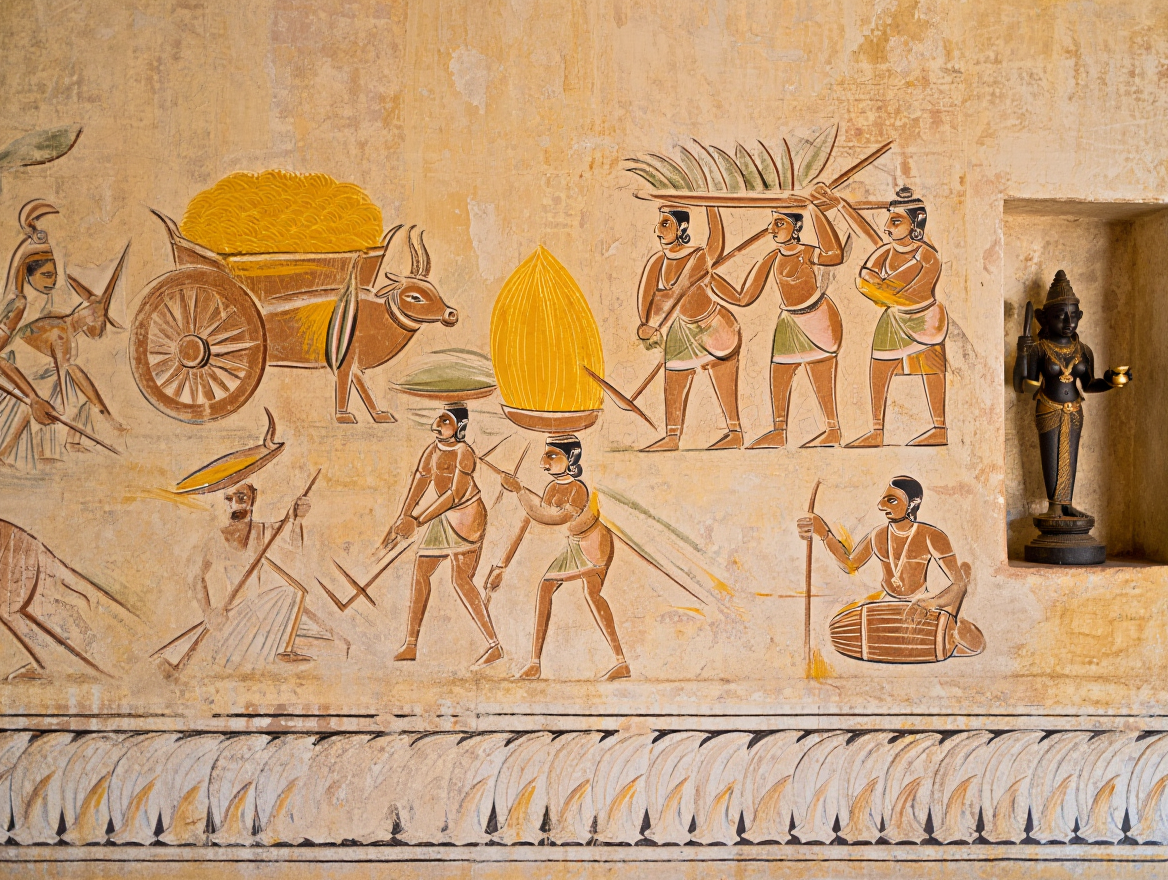
நிலம் is the ground, in every sense the word will allow. It is the soil under foot, the parcel in the deed, the country one is from, the metaphysical substrate of being. The Tolkāppiyam (Poruḷatikāram 4) opens the entire akam poetic system by declaring நிலம் and பொழுது — land and time — as the foundational categories of love poetry. Every Sangam poem is set in a நிலம். The five tiṇais (kuṟiñci, mullai, marutam, neytal, pālai) are five lands, and the same word tiṇai means both 'land' and 'genre' because in Tamil poetics they are not two things. Sanskrit's பூமி arrived later and took the cosmic register (Mother Earth, the planet, the element). நிலம் kept the ground itself. The most ordinary modern fact is that நிலம் has narrowed further: it now usually means property — a plot to buy, sell, or register. The word that once organised emotional life now mostly organises ownership records.
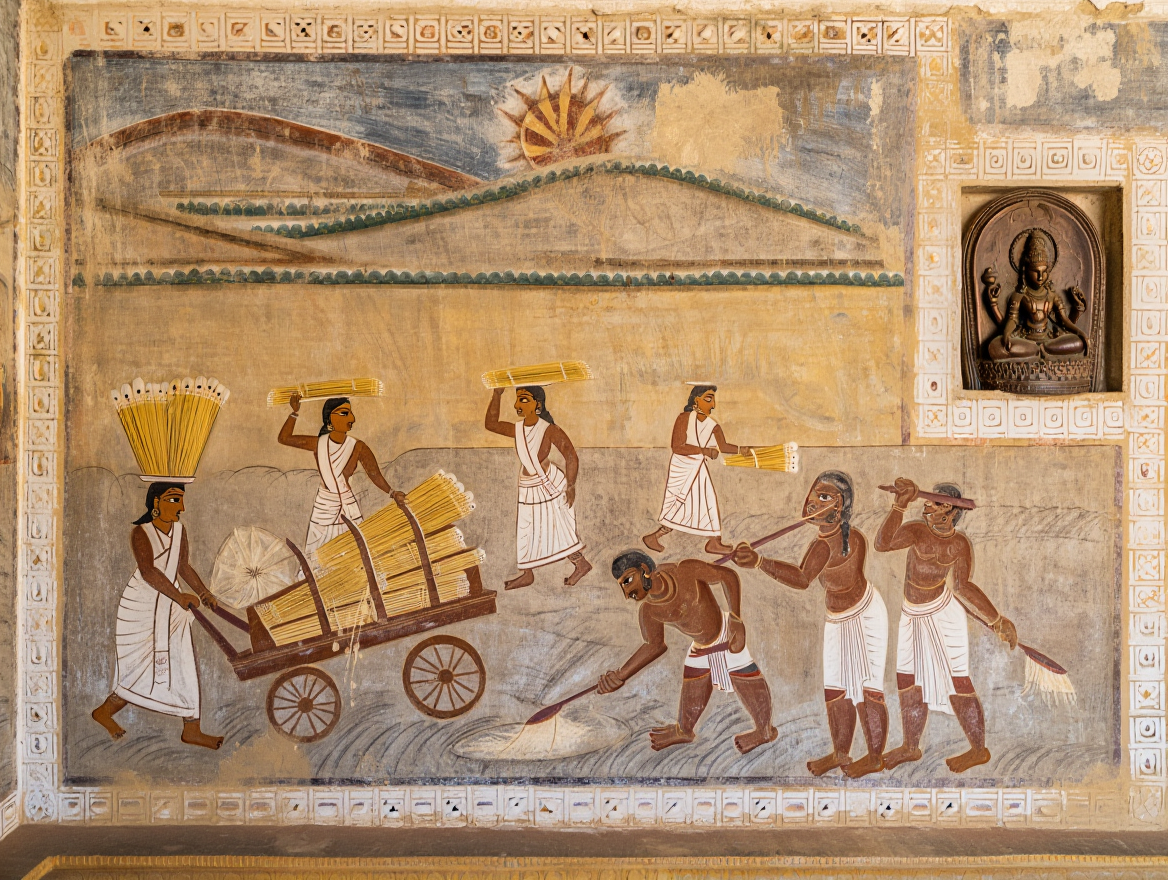
Madurai is named after a tree. The Pandyan capital, seat of the Tamil Sangam, city of the Mīnākṣi temple, gets its name from மருதத்துறை (marudattuṟai), the landing-place of the marudu trees on the banks of the Vaigai. The marudu — identified by the Madras Tamil Lexicon as Terminalia alata (König), the black-barked riverside tree known in Tamil as கருமருது — is the namesake of the marutam tiṇai, the cultivated riverine landscape of Sangam akam grammar. The tree gives its name to the landscape; the landscape gives its name to a city; the city becomes the literary capital of Tamil itself. Of the five Sangam tiṇai, marutam is uniquely the landscape of married love and its cycles. The Madras Tamil Lexicon defines marutam-akam not as 'lover's quarrel' but more precisely as 'enjoying union after sulking' (ஊடியுங் கூடியும் போகம் நுகர்வது) — the sulk is instrumental, the reconciliation completes it. Where kuṟiñci is union and mullai is waiting and pālai is separation and neytal is pining, marutam is the only landscape whose canonical action is internal to the household: the husband returning from the paratta-concubine, the wife performing ūṭal, the friend mediating, the reconciliation arriving. Kuṟuntokai 8 is the textbook poem: the concubine voicing her grievance within hearing of the wife's circle. The Tolkāppiyam codifies the framework in Poruḷatikāram sūtra 6; Aiṅkuṟunūṟu 74 and Ciṟupāṇāṟṟuppaṭai 186 attest the tree-on-the-riverbank as canonical Sangam image. Tamil folk-naming has long applied 'marutu' to multiple Terminalia species — T. alata (கருமருது, the tiṇai-namesake) and T. arjuna (வெண்மருது, the heart-medicine tree of Siddha medicine) sit together under the same root — and the older Tamil tradition did not separate them as Linnaean taxonomy now does.
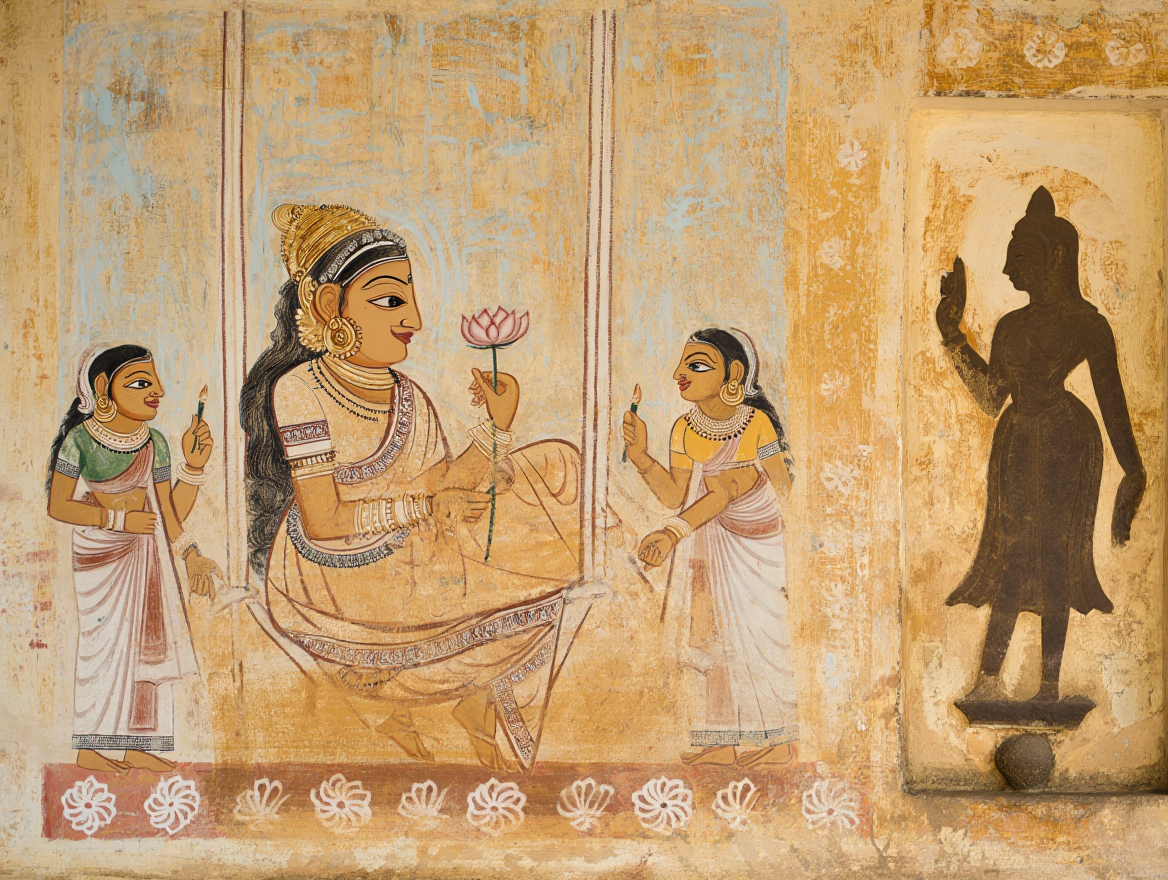
The Tamil queen-word landscape is structurally different from the king-word landscape. Where the king had a thick native thesaurus (கோ, மன்னன், வேந்தன், இறை, ஆண்டவன்) before Sanskrit arrived to add அரசன், the queen had a goddess at the top (கொற்றவை, the victory-personified) and king's-wife formations at the bottom (king's-house-woman, king's-daughter). There was no native queen-as-office word parallel to the king-as-office words. So when Sanskrit's rājñī arrived as அரசி, it filled an empty consort-slot rather than displacing an established native word. Modern Tamil's central queen-word is therefore Sanskrit-derived not by competition but by default. The deeper native figure of sovereign-feminine power — Koṟṟavai, the victorious one, mother and war-goddess of the wasteland — survived as a deity, not as a vocabulary item. The grammar of female sovereignty in Tamil went up into religion, not sideways into administration.
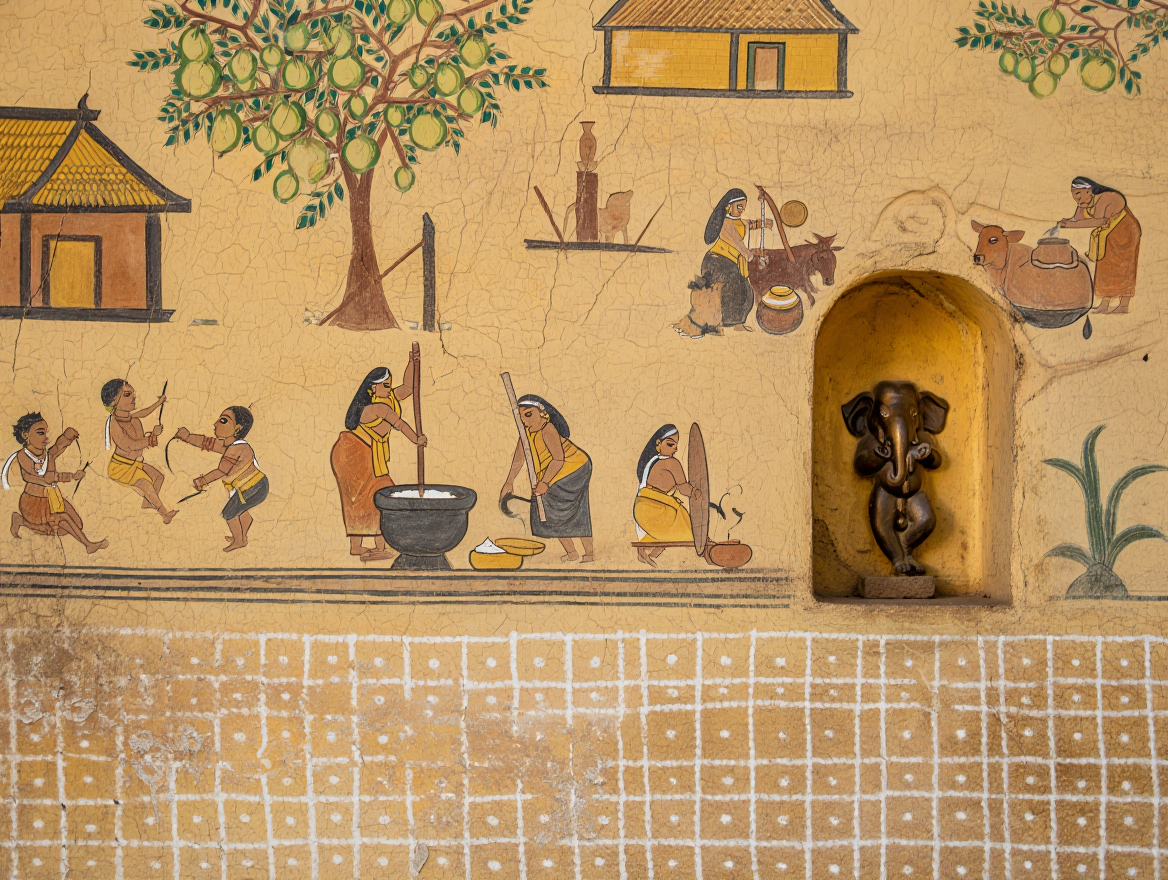
The Tamil word for village is also the Tamil word for one's place. When a Tamil speaker asks where someone is from, the standard phrasing is 'unga ūr enge?' — where is your ūr? It does not specify village or town. The word carries the older Proto-Dravidian sense of any human habitation, the settled place as such, against the wilderness. Krishnamurti's reconstruction puts this plainly: *ūr was the general word, *paḷḷi was the hamlet, *nāṭu was the country. In Sangam akam, the marutam-tiṇai hero is the ūraṉ, the man from the ūr — Kuṟuntokai 8 is the canonical example, where the agricultural village landscape frames the poem's emotional content. The Sanskrit-derived கிராமம் entered later and took the administrative register, leaving ஊர் to keep the intimate one. But ஊர் has a second life that no other Tamil settlement-word has: the universalist reading. Kaṉiyaṉ Pūṅkuṉṟaṉār's Puṟanāṉūṟu 192 opens with the line that has become Tamil's most quoted single verse: யாதும் ஊரே, யாவரும் கேளிர் — every place is my place, everyone is my kin. The same word that means my particular village means every village in the world. The intimate and the universal sit inside the same syllable. G.G. Ponnambalam quoted the couplet at the UN General Assembly in 1966; A.P.J. Abdul Kalam in his speeches; Prime Minister Modi at the UNGA in 2019. Two and a half thousand years after Kaṉiyaṉ wrote it, the line outlived not just the poet but the literary tradition that produced him.